- Introduction
-
Introduction
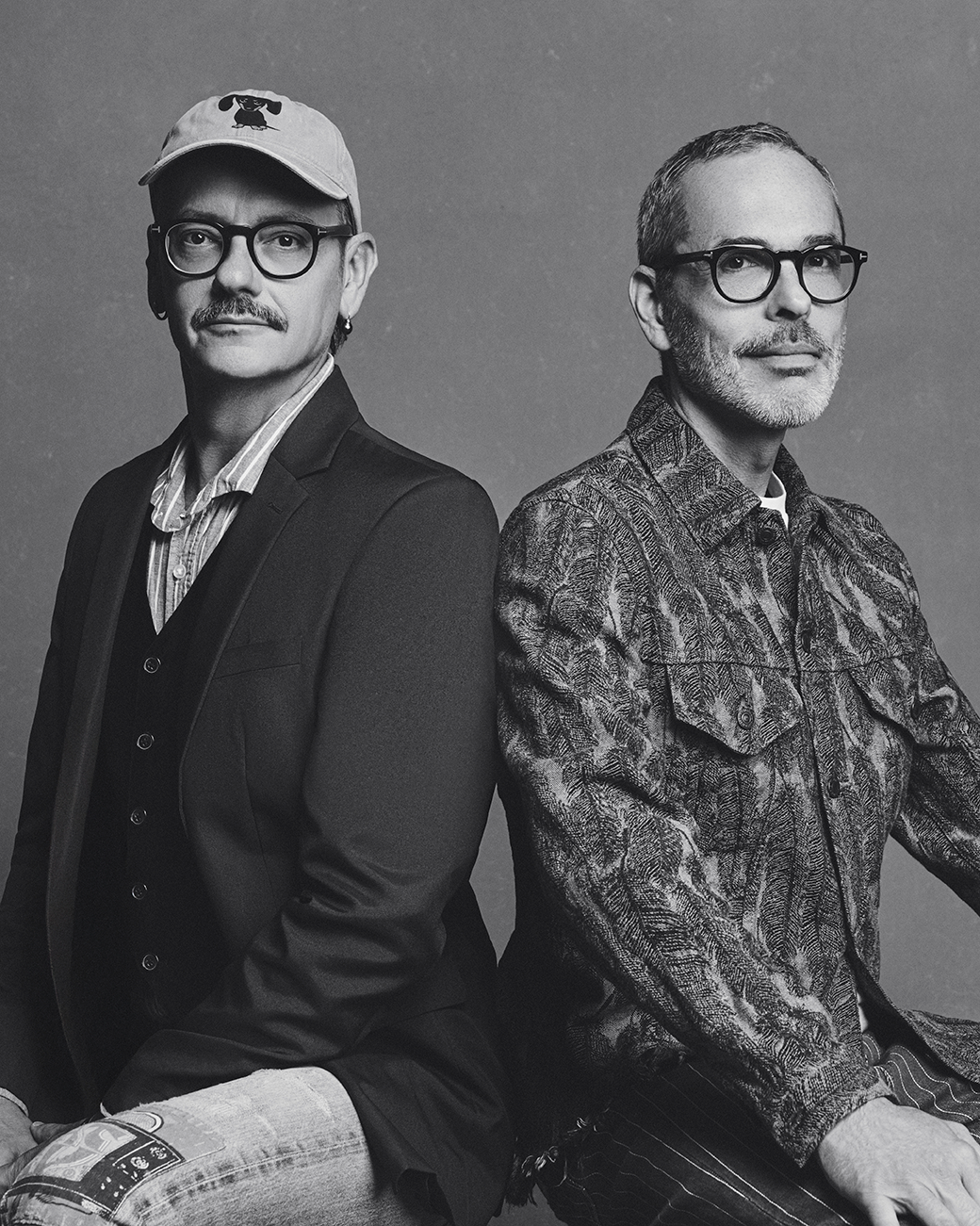
Viktor
Hi, I’m Viktor.Rolf
And I’m Rolf.Viktor
Welcome to our exhibition Fashion Statements.Narrator
Both designers will accompany you on your tour and provide insights into their work. This exhibition introduces you to the haute couture world of the Dutch designer duo. They call themselves fashion artists because they don’t want to choose whether their work should be regarded as fashion or as art. For thirty years, Viktor&Rolf have been turning the fashion world upside down with surprising catwalk presentations and by questioning conventions and asking what it means to get dressed. - Late Stage Capitalism Waltz
-
Late Stage Capitalism Waltz
Narrator
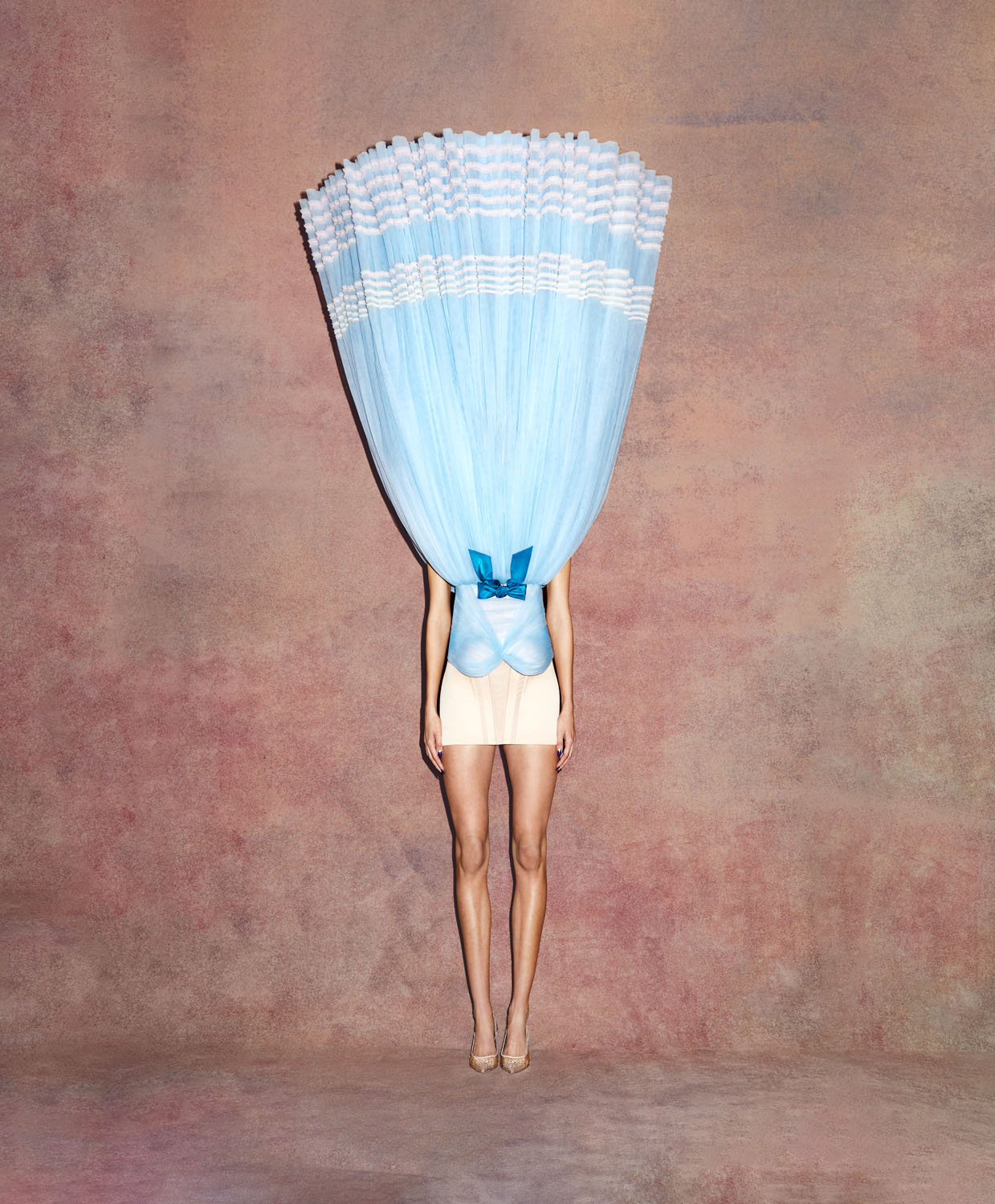
Welcome to Viktor&Rolf’s Upside Down Store! In here, it’s a topsy-turvy world that includes the most spectacular dress from the summer 2023 collection Late Stage Capitalism Waltz. Viktor&Rolf’s flagship store in Milan, which opened in 2005 and featured an upside-down neoclassical interior, no longer exists. But for a long time, the two designers were preoccupied by the idea of separating clothes from the body and, for example, turning them upside down.Rolf
Although everything we sketch can be made, knowing the fashion pace and where we have to make at least two collections a year, some ideas just need time, which often isn’t there. And for the Late Stage Capitalism Waltz collection, we had been trying this for many seasons, and it never somehow materialized. It was—always looked forced; it just didn’t work.Viktor
And the idea wasn’t crystallized enough yet.Rolf
Exactly. Until one season we thought, “Oh, when we do it like this it can work.” And we went to the head of the atelier and we said, “This season it needs to happen.” And it could happen because he had been trying it for many seasons.Narrator
The dress refers to the glamorous days of haute couture in the mid twentieth century. Viktor&Rolf don’t reveal the techniques they used to create their upside-down ball gown, except that they found a partner to help them make their dresses float—Dutch manufacturer of top-quality mannequins Hans Boodt Mannequins.Viktor
Dress meets body, or body meets dress. It’s almost like a random encounter in space between a garment that’s completely autonomous and the body, and they just happen to collide in a random, almost random way.Rolf
But then it has to look completely natural and perfect. And that was very difficult until we found a way to have printed Hans Boodt mannequins and put them inside of the clothes. [They] were very complicated structures, and, yes, it felt right.Viktor
Yeah, so in addition to traditional couture techniques, there was 3D printing involved as a basis for the structures that were put on the models to support the randomly floating garments. We experimented a lot; the atelier experimented a lot. And this was like a eureka moment when they discovered that it was possible to 3D print these mannequins with Hans Boodt.Rolf
And that indeed in the end, it looked almost effortless. - Two Designers One Vision
-
Two Designers, One Vision
Narrator
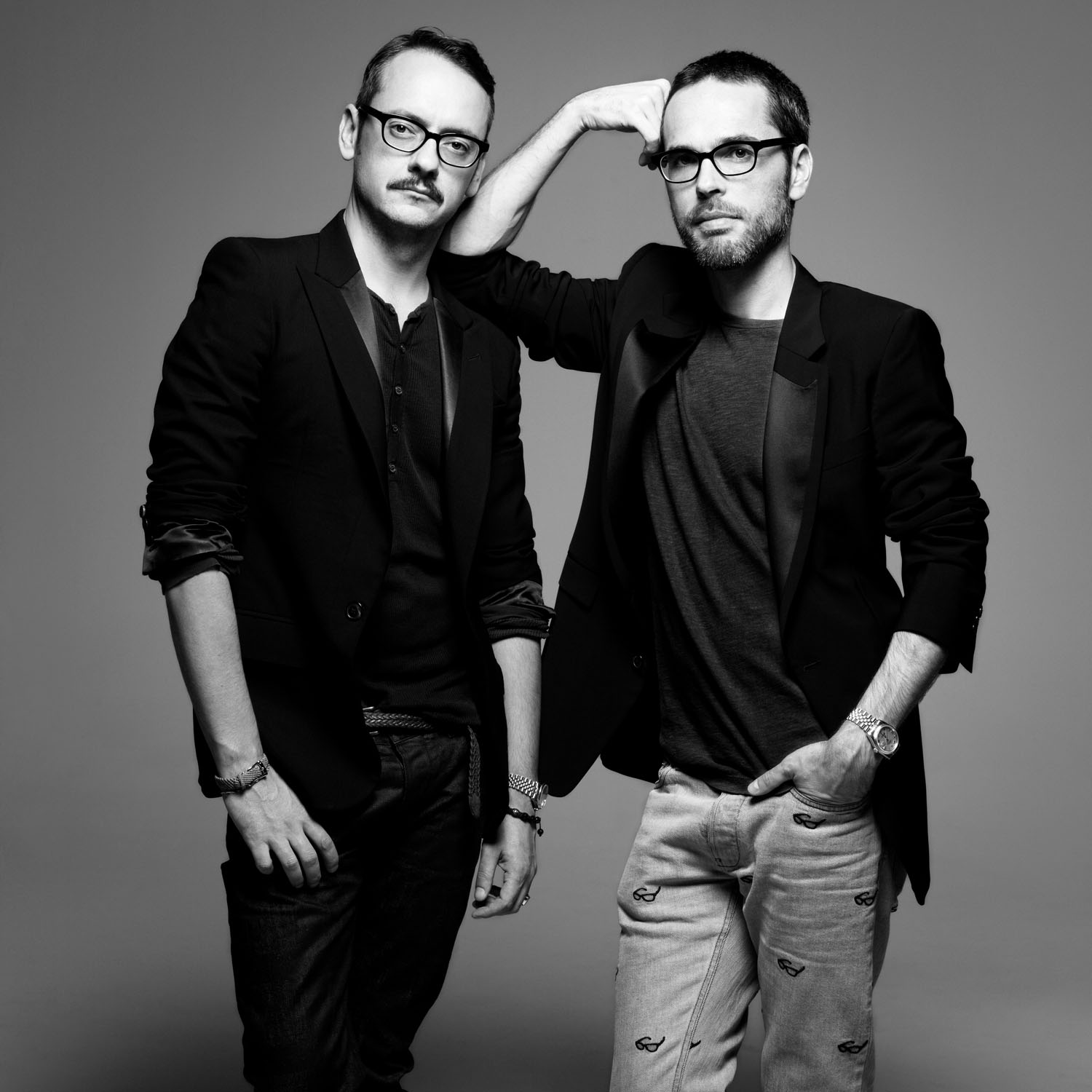
Viktor Horsting and Rolf Snoeren met in 1988 at the Academy of Art & Design Arnhem. They both came from a small-town background and didn’t know much about fashion. But Horsting was fascinated by fine women’s clothing, and Snoeren, who drew a lot as a teenager, wanted to become an illustrator.Rolf
When we were studying, it was a very, the emphasis was very artistic. We had almost no knowledge about the industry, but somehow the message we got was that after art school we would have to work very commercial and work in a jeans company or something. So, when we graduated, we thought, “Well, maybe this is just the beginning and maybe we can take it to an extreme.” Then there was the Festival d’Hyères, which was at the time the only big design contest in Europe. And we always wanted to do something together, and we thought, “Maybe this is a nice way of finding out how that is.”Viktor
The contest was in April ’93, and in December ’92, we had moved to Paris. So, all of a sudden, we had thrown ourselves into this completely new surrounding, completely new way of living. This sounds very romantic. We had no money, hardly any money whatsoever; we didn’t know anyone. And the Festival d’Hyères was a way of starting something, and it was a great opportunity for us to try what it would be like to work together.Narrator
That first collection for Hyères was created on a shoestring budget in their tiny Paris apartment.Rolf
But when we participated, we noticed that all the other participants had a real label; they really wanted to start their own label. We just didn’t have that ambition, but it was—there were a few prizes, and at the time we won them all, which was amazing and totally unexpected—but everybody expected us to continue and to start a label. And even when we won the prizes and they called us on stage, they had no name to call us because we didn’t call ourselves Viktor&Rolf.Narrator
When they were invited to come on stage, it was simply as Viktor and Rolf, and this became the name of their label. In the early days, though, they showed their creations mainly in art galleries and museums.Viktor
There was more interest from the art world right from the start—I think because our work was kind of ambiguous: we would make collections, but we would also make videos, or we didn’t just make fashion. And when you want to be a fashion designer, you enter into a rather rigid system. Fashion is a really rigid system with an industry behind it. And it took us about five years to experiment, until we found our way and until we were more clear about what we wanted. And that’s when we started showing haute couture in ’98 for the first time, when we decided, “OK, we need to focus more. We want to be in fashion—we need to focus more.”Rolf
No, it started with the First Couture show—that was the first show that we got noticed. But it was only the Atomic Bomb show where we really felt a huge difference in . . . international attention.Viktor
For us artistically, in terms of the work we made, we made a huge step in terms of quality from the First Couture collection to the Atomic Bomb collection. Also, when you look at the show, it’s much more professional. Plus, the audience all of a sudden at the second show was there—the international audience that mattered—they were all there.Narrator
A year later, Viktor and Rolf were accepted as members of the Fédération de la Haute Couture et de la Mode (Federation of Haute Couture and Fashion). The organization applies strict criteria to decide which fashion houses are permitted to call their collections “haute couture.” - Wearable Art
-
Wearable Art
Narrator
What is “wearable art”? Does the term refer to paintings or clothes? And are Viktor&Rolf artists or fashion designers? The designers have been asked this again and again, ever since they first began working together.Viktor
This question started to bore us a little bit, so that’s why we, at a certain point, we decided to call ourselves fashion artists—in a way to duck the question but also to say, “We don’t want to choose. Why can’t it be both?”Narrator
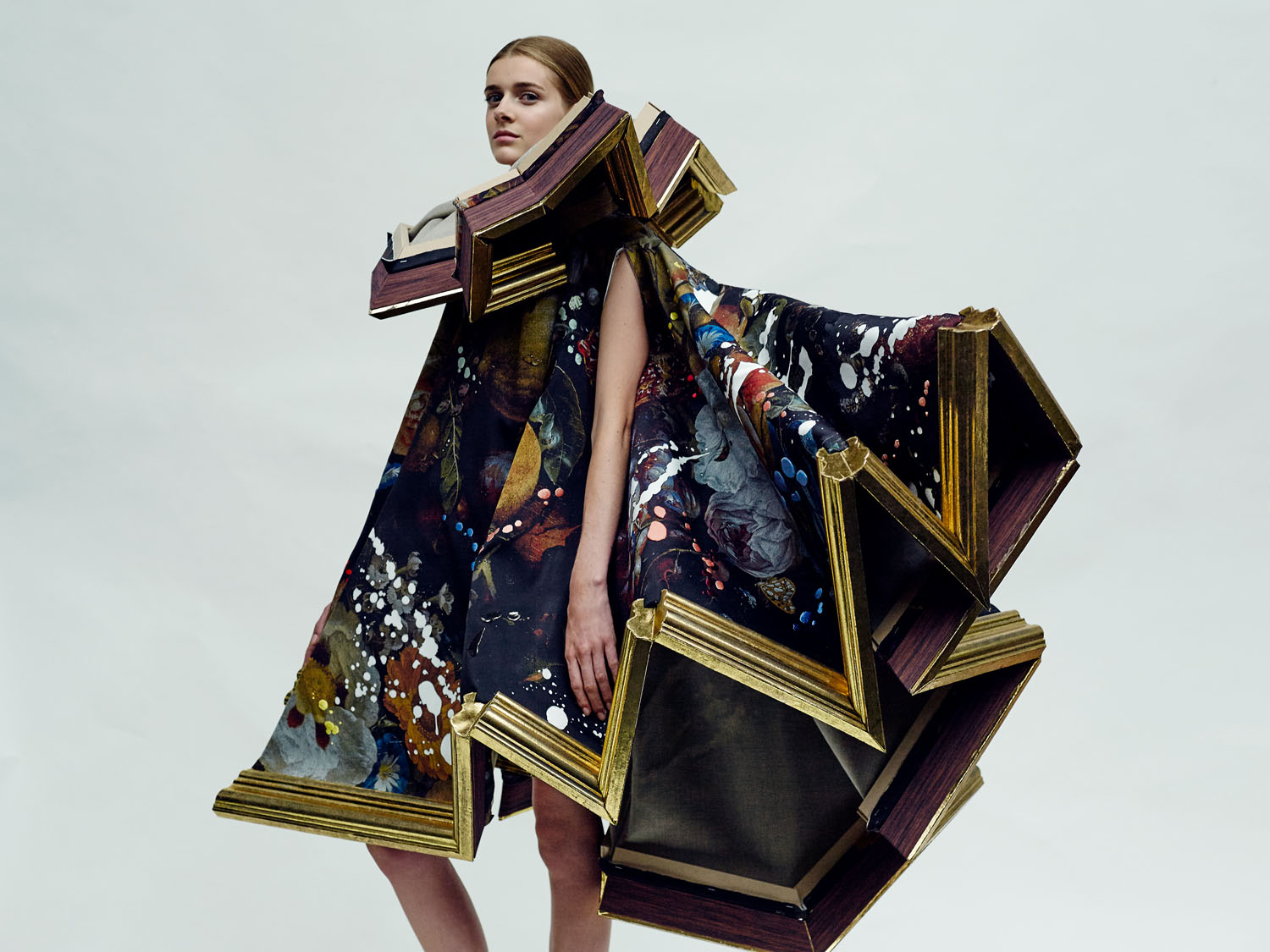
Viktor&Rolf are inspired by artists across all genres—from Van Gogh to mime artist Marcel Marceau. The connection to the visual arts is most evident in their Wearable Art and Performance of Sculptures collections. Wearable Art started with a question: what if art could be worn? But designing it would be tricky. So, to visualize their idea, Viktor&Rolf draped painted canvases onto a model.Viktor
This particular collection was created at a moment when we had decided to stop our ready-to-wear, and we decided to continue showing our haute couture. To emphasize the uniqueness of couture, we decided to take art as a starting point. And with this collection, we took paintings—so something very literal that says, “this is art”—and we turned it into a collection. We liked the idea to show them in different ways. You can actually hang them on the wall as a painting or a painting-like sculpture, but you can also wear them, all of them.”Once we decided to create a collection around the idea of using a painting in a literal way and turned it into a dress, we started figuring out how you can do that, because it’s not an obvious way to make a garment. So, it’s interesting to have a close look at the way the garments are constructed. A painting obviously has a frame, which is hard, but then it has a stretched canvas normally, which is soft, which is a fabric. And the fabric choice was intended to make it look like a painting but at the same time like a couture dress. So the painted elements that you see are in fact woven images in jacquard. And we used a splash motif translated into fabric as a way to show a certain spontaneity, to give a feeling of action and energy to the garments.
Narrator
The collection was presented on an empty stage with a white wall as its backdrop. Twenty models were all styled the same way—hair parted at center and tightly drawn back into a ponytail, restrained makeup, and flat shoes in black. Viktor&Rolf wanted the focus to be solely on their creations. It was quite a sensation when they began removing the garments from five of the models during the show and hung them on the wall. The audience saw paintings in gold frames on display like artworks in an exhibition. - 1859
-
Inez & Vinoodh Triptych
Narrator
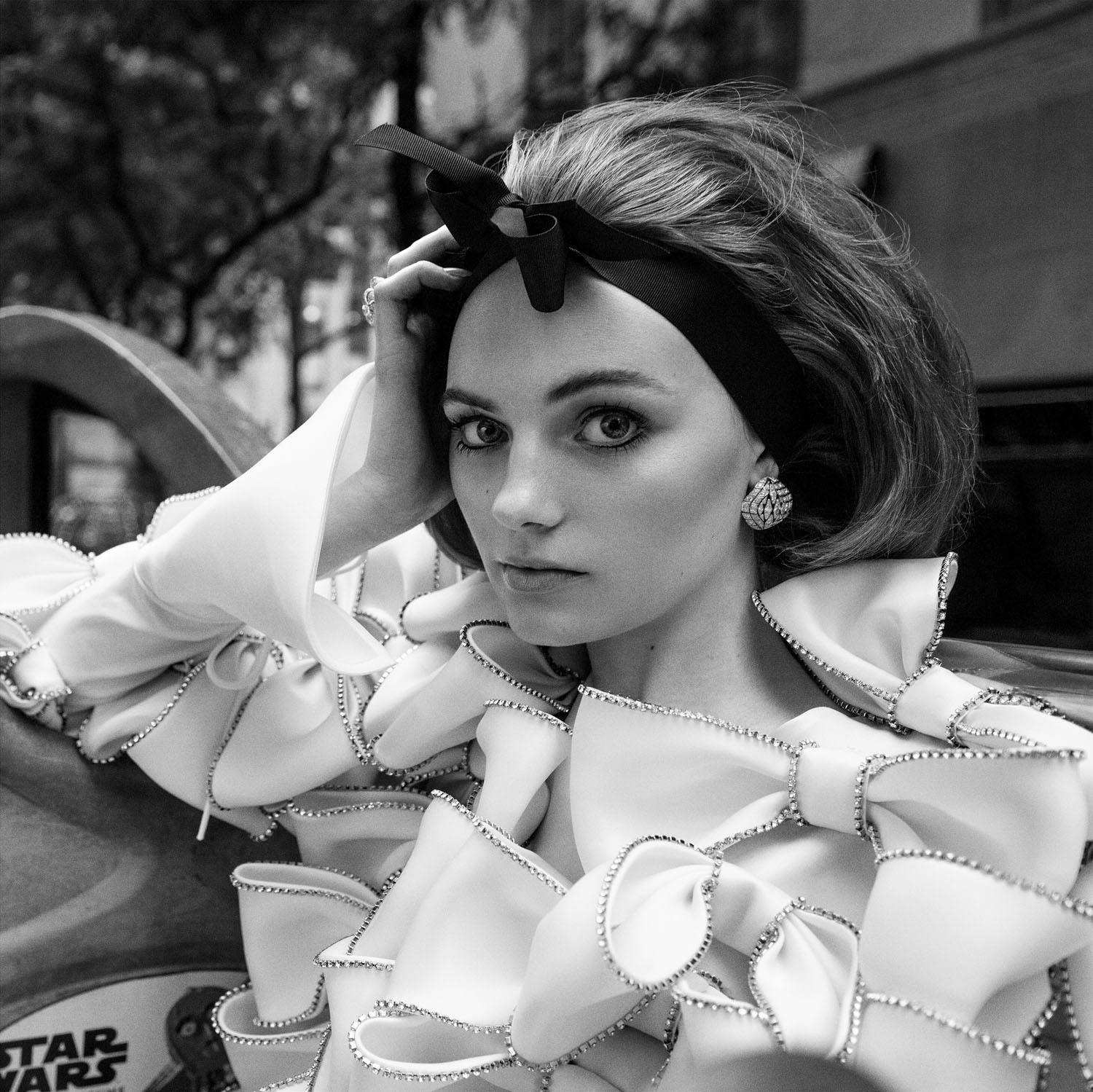
Looking at this triptych by photographers Inez van Lamsweerde and Vinoodh Matadin, known collectively as Inez & Vinoodh, it’s obvious why Viktor&Rolf have worked so closely with the duo for almost thirty years. Both pairs of artists have a very fluid view of fashion: they continuously explore new technical possibilities while not allowing themselves to be constrained by the limits of their craft. The works of both partnerships are found in prestigious magazines and art museums. And they love to play with contrasts.This is how Viktor and Rolf describe their connection to the photographers:
Rolf
What I like is that they strive, as well, for some sort of complexity. Things are always a little bit off; it’s never perfect.Viktor
But at the same time it’s extremely polished, glamorous, and there is often something surreal, like a surreal beauty. You can tell that the goal is always beauty—but new.Narrator
Inez & Vinoodh have been working together since 1986, when they met at Akademie Vogue in Amsterdam. They soon began experimenting with digital photography and became famous for their portraits and their distinctive aesthetic. They’ve been working with Viktor and Rolf since the 1990s. Rolf remembers:Rolf
We met Inez and Vinoodh at an exhibition in Paris, curated by Olivier Zahm from Purple fashion [magazine], who has been very important in the beginning of our career. And well, we became friends because they’re Dutch, we’re Dutch, and in the beginning of our career they really helped us—not only by photographing our clothes, but they as well helped us with casting, and they helped us with the shows, even hair and makeup. We even remember that after the First Couture show we did, with some quite abstract ideas, Inez and Vinoodh told us, “What if these abstract ideas are translated more into real clothes?” And it was a comment that really helped us, and we stayed friends over the years. They have worked on all our fragrance ads—Viktor
And not just the fragrance ads—any advertising to speak of has been photographed by Inez & Vinoodh. - Performance of Sculptures
-
Performance of Sculptures
Viktor
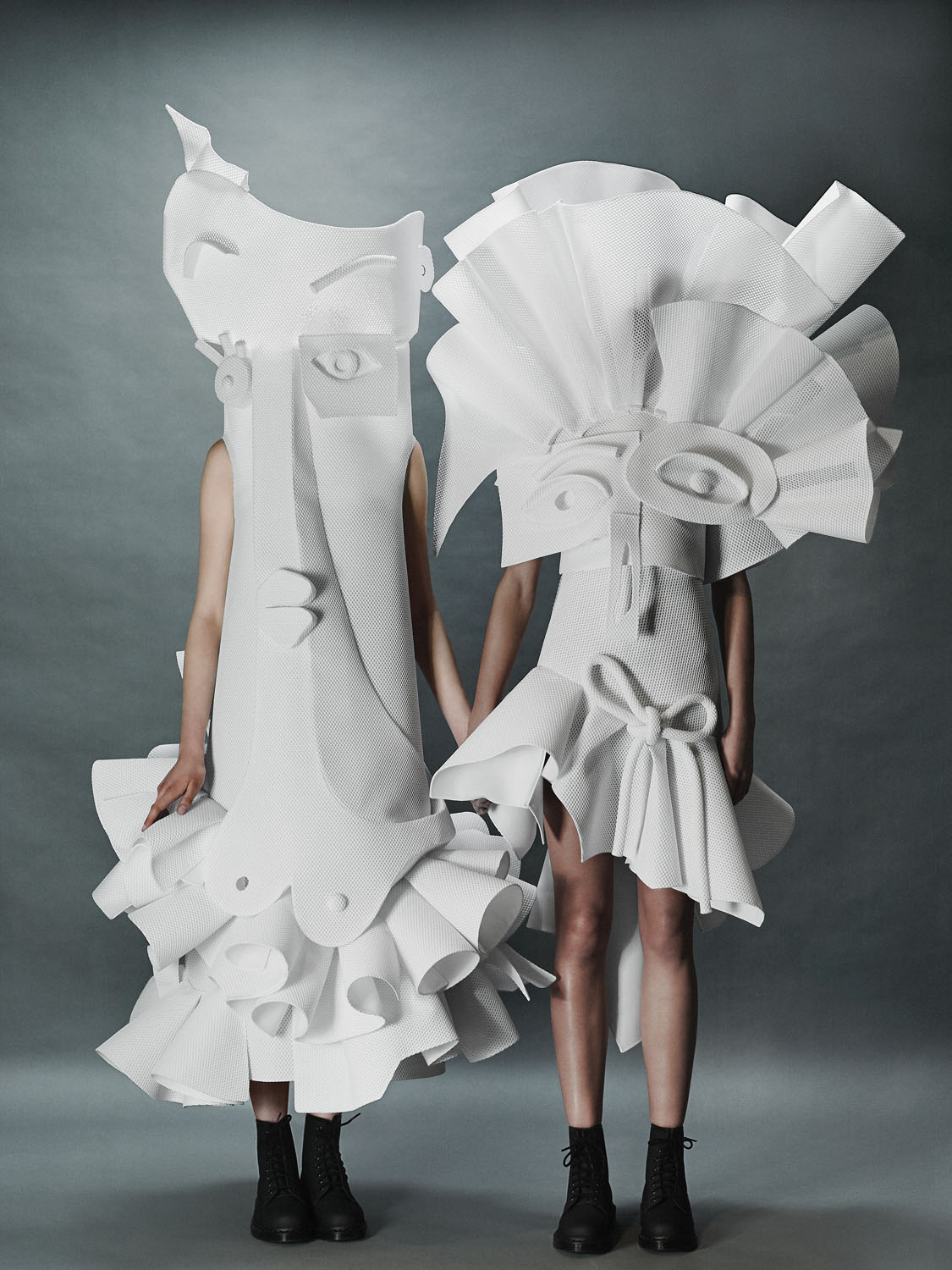
The Performance of Sculptures is interesting because it’s part of a trilogy that’s dedicated literally to art. There is one that is about painting. This one is dedicated to sculpture. So, we thought, how can we merge the idea of sculpture with clothing? In this case, we took a very simple white piqué polo shirt as a clothing reference, and we mixed it with Cubist sculptural references. We wanted to take this idea very far, to the point that the garment would be so autonomous that you don’t even see the wearer anymore. So, there’s no face, there’s no personality; it’s a moving sculpted garment or garment sculpture. It’s a very clear example of how a garment becomes autonomous. But in our thinking, it always is—whether it’s a tulle dress or a suit with weird shoulders. Not that the wearer is unimportant, but the wearer carries the garment and the garment is autonomous. That’s also why we don’t have such a fetish for who wears it or a fetish for celebrity dressing, for instance. Our work is finished when the garment is finished.Narrator
Of the twenty-two garments in this 2016 haute couture collection, these are the three most spectacular, in which only the arms and legs of the wearers are visible. During the show, the models were only able to see their surroundings through tiny holes, while the looks themselves have large three-dimensional eyes, noses, and mouths.Viktor&Rolf were playing with sculptural themes of drapery and material. Their creations, which are reminiscent of Cubist sculptures, were precisely cut and molded from synthetic material.
The designers wanted to highlight the extent to which their haute couture collections are distinct from their ready-to-wear collections, as celebrations of creative expression—as art.
- Princess Mabel's Wedding Dress
-

Princess Mabel's Wedding Dress
Narrator
In 2004, Mabel Wisse Smit wore this dress when she married Prince Johan Friso of Orange-Nassau. Viktor recalls the extraordinary collaboration:Viktor
We were approached by Princess Mabel to design her wedding dress. She was getting married to the second son of Queen Beatrix. We at first made a few sketches for her that we thought were appropriate for a royal wedding. They were rather conservative. And Mabel sent them back to us, and she said, “This is not what I want. I want more of a statement. I come to you for a dress that has your signature, and I don’t want to have something generic.” So then we designed the dress with—Rolf
A lot of bows, in fact 264 bows, from very small to huge bows on the train and a real now-classic Victor&Rolf design, and she loved it.Viktor
I think for us the word “focus” is very important—“focus” and “purity.” If there is an idea, we try to reach, try to understand how to express it in the most pure form.Narrator
Viktor&Rolf love to experiment. The wedding dress combines a pure and elegant form with extravagance and a hint of the unconventional as the princess requested. Some six hundred hours of work went into creating the silk gown. The most striking detail is the bows, which are a recurring feature in Viktor&Rolf’s work. For them, bows are a symbol of haute couture. - Woodlands-Artist
-
Russian Dolls
Narrator
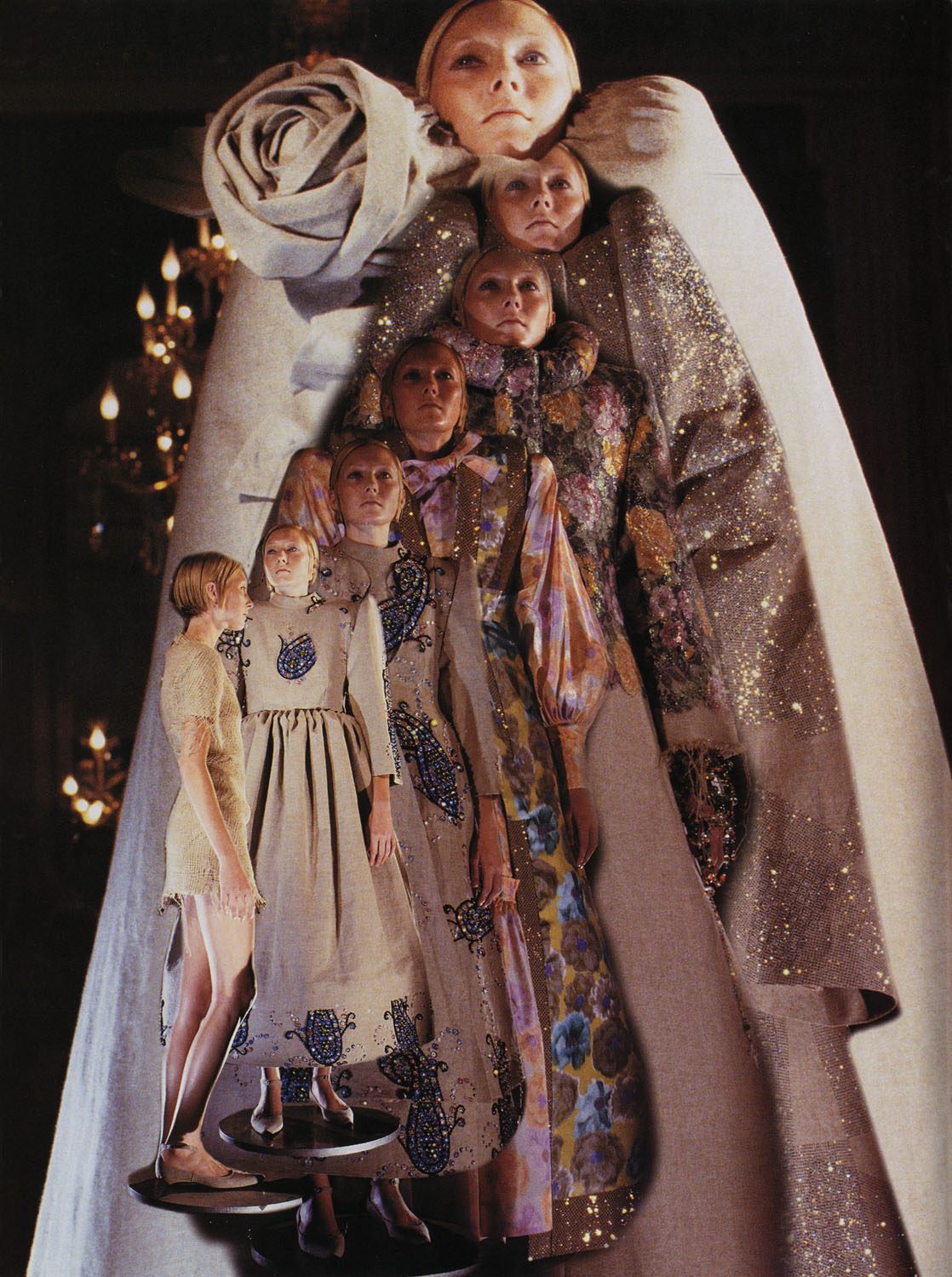
Paris, July 1999. US supermodel Maggie Rizer strides towards the middle of the space in front of 125 invited guests. She’s barefoot and wearing a simple, short dress made of jute—an unusual fabric for an haute couture show. In front of her, on a circular platform, is a pair of elegant shoes. Viktor&Rolf enter from the wings and help her into the shoes, and the platform begins to turn, like a music box.The designers appear on the catwalk eight more times, bringing garment after garment, lavishly decorated with crystals and embroidery, and putting them on Rizer, one on top of the other. By the end, she is wearing more than 154 pounds of fabric—a matryoshka, or Russian doll, in haute couture.
This show marked two firsts for the designers: working with a single model and actively participating on stage.
Viktor
With the Russian Doll show, it was funny, because we were on a tight budget and we thought, “Would it be possible to do a show with one model?” This was partially budgetary restrained. At the same time, it was also something that we liked, because by working with one model on stage, it was like turning her almost into a goddess or a godlike symbol. And to us it was like a symbol of creativity—because it’s a couture show, it’s the, let’s say, the highest form of fashion. So symbolically, we also found that a very attractive idea. So that’s how the idea came about. And then we started elaborating the idea: “What can you do with one person?” Logically, we thought, “If one person is on stage, she needs to be dressed. Who is going to do that?” It makes sense that it would be the designer or the creator who thought of it, i.e., us. And we don’t really like to be on stage, but it was kind of necessary conceptually, because who else would, yeah, who else could do it? No one.Narrator
For the finale, Viktor&Rolf placed a garland of white flowers at their Russian Doll’s feet. The audience, who had enthusiastically applauded each new outfit, celebrated the designers with a standing ovation.Even now, the Russian Doll show is regarded as one of the boldest and most original ever to be seen in Paris. Since Viktor&Rolf only showed nine outfits, they didn’t expect such a major success, which made the experience all the more overwhelming:
Rolf
I must say that was really an amazing moment because we felt the energy shift in the room during our performance. We just felt it. And, yeah, that was a beautiful moment.Viktor
And so unexpected because it was, in our minds, it was a risk. It was a very small collection; it was also a wacky idea, yeah, and it was a bit scary—scary because it was such a risky idea but also scary because we were there exposing ourselves.I think we started incorporating ourselves into our work at quite an early stage. I think we started to regard fashion almost like a play. And we started to look at ourselves as actors in this play, as a persona, two personas who were acting out the role of designers. I think that’s what we wanted to, in a way, wanted to show. That’s also why we started wearing the same glasses, and we played with the idea that we were like one and the same, which we did for a while.
Narrator
Viktor&Rolf returned to the idea of dolls in 2006, when they decided to select a dress from each of their collections and commission a faithful copy in miniature. The dresses are worn by Victorian-style dolls, just like the little Russian Dolls you see here. You can see this large selection of dolls from their collection on display in a later gallery. - Glamour Factory
-
Glamour Factory
Narrator
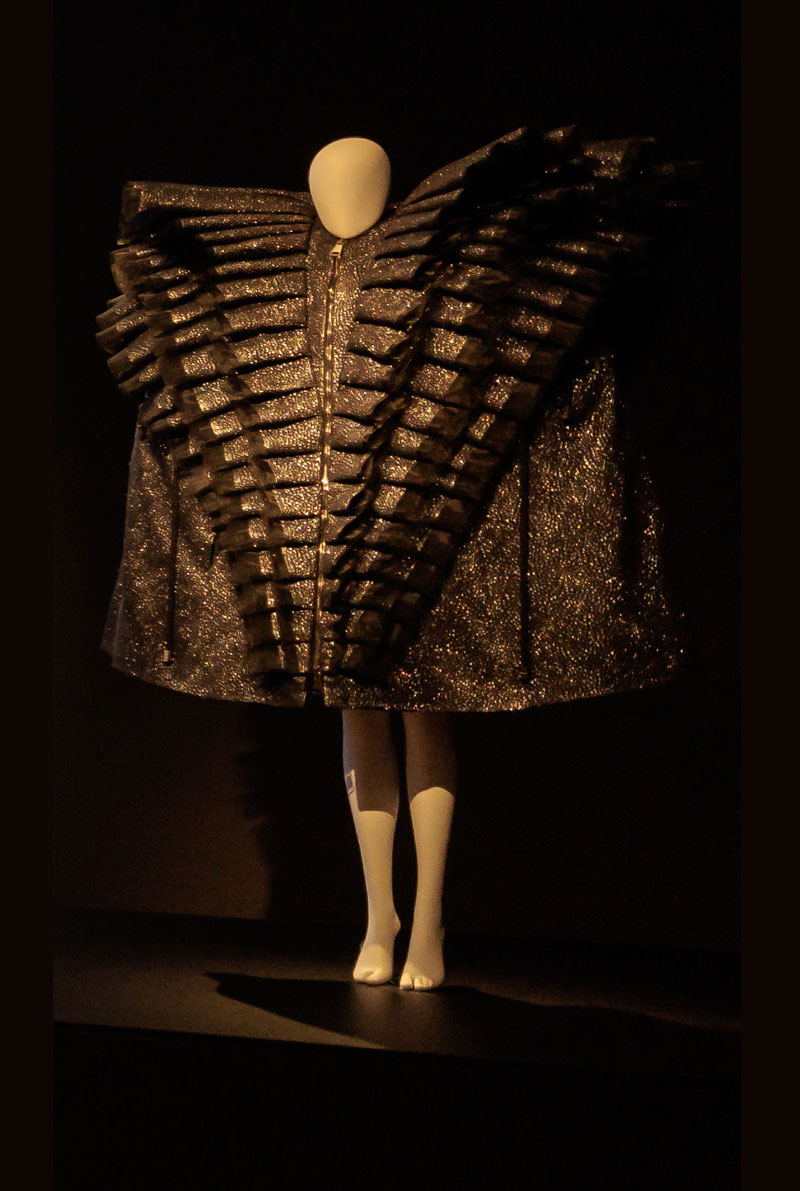
Imagine you’re wearing twenty-three outfits, one on top of the other. Your feet are tucked into boots with insanely high heels, and you’re standing on a slowly revolving platform. And then, with an international fashion audience looking on, you turn and head backstage, without even the hint of a wobble under all that weight and pressure.This was the challenge facing US model Kristen McMenamy during the presentation of Glamour Factory in 2010, and she succeeded. For this collection, Viktor&Rolf inverted the principle of their previous show Russian Doll. McMenamy walked onstage, weighed down by all the garments in the collection and accompanied by the fashion artists. They removed each outfit after another and transferred them one by one to the other models as they stepped from the catwalk to the rotating carousel.
Viktor&Rolf worked calmly but swiftly. Once Kristen McMenamy was wearing nothing but a pale bodysuit, the other models came back onstage. The designers helped them out of their clothes and put the outfits back on McMenamy as she stood motionless and expressionless throughout.
During it all, the audience observed how the outfits morphed: coats were turned inside out, wide silhouettes became narrow, and a cape turned into a dress. Finally, a voluminous ball skirt transformed into this coat with its oversized ruff.
What looks like part of an haute couture collection was actually developed as ready-to-wear. Viktor&Rolf wanted to show that their creations could be both wearable and off the wall.
- Fashion Statements
-

Fashion Statements
Narrator
At the 2019 Fashion Statements show, models floated down the catwalk, dressed in romantic gowns made from almost five miles of delicate tulle, and confronted the audience with hard-hitting statements such as, “I’m not shy; I just don’t like you.”Viktor
The Fashion Statements collection, I think, is again a good example of how we like to put opposites together to create something new and unexpected, and in this case, also quite humoristic, I think, or ironic.Rolf
Sometimes we notice that we reach a limit in what we can say with clothes. So, our clothes often literally say something like “No” or—Viktor
“I love you”—Rolf
“I love you,” or there’s such a huge concept which is difficult to explain in words. So, at the time, we were thinking, “How can we take that to an extreme, and how can we use text in couture?” And we saw a lot of these texts on Instagram, ironic texts, and we thought, “Oh, it would be nice to combine this with couture and something very sugary and poetic and soft and then incorporate these.”Viktor
Like these random, almost random texts that you get that are thrown at you on social media, like these affirmations. And it goes from something very worthy to something very ironic or something very superficial or want-to-be deep. So those were the elements that was on our minds when we were thinking about this collection.Rolf
So, we looked at all those comments, a lot of T-shirts that they’re printed on, and then incorporated them in our own couture world.Viktor
And we really like the juxtaposition of these texts that are more at home on a T-Shirt or on the internet than on a couture dress. And it’s funny because the texts, the whole idea is saying something about the internet and social media and how we are influenced by it. And then this particular collection got completely picked up by social media.Rolf
It went viral.Viktor
It went viral, and our following sort of doubled. [laughs] You can’t make it up. - New Royals
-
New Royals
Narrator
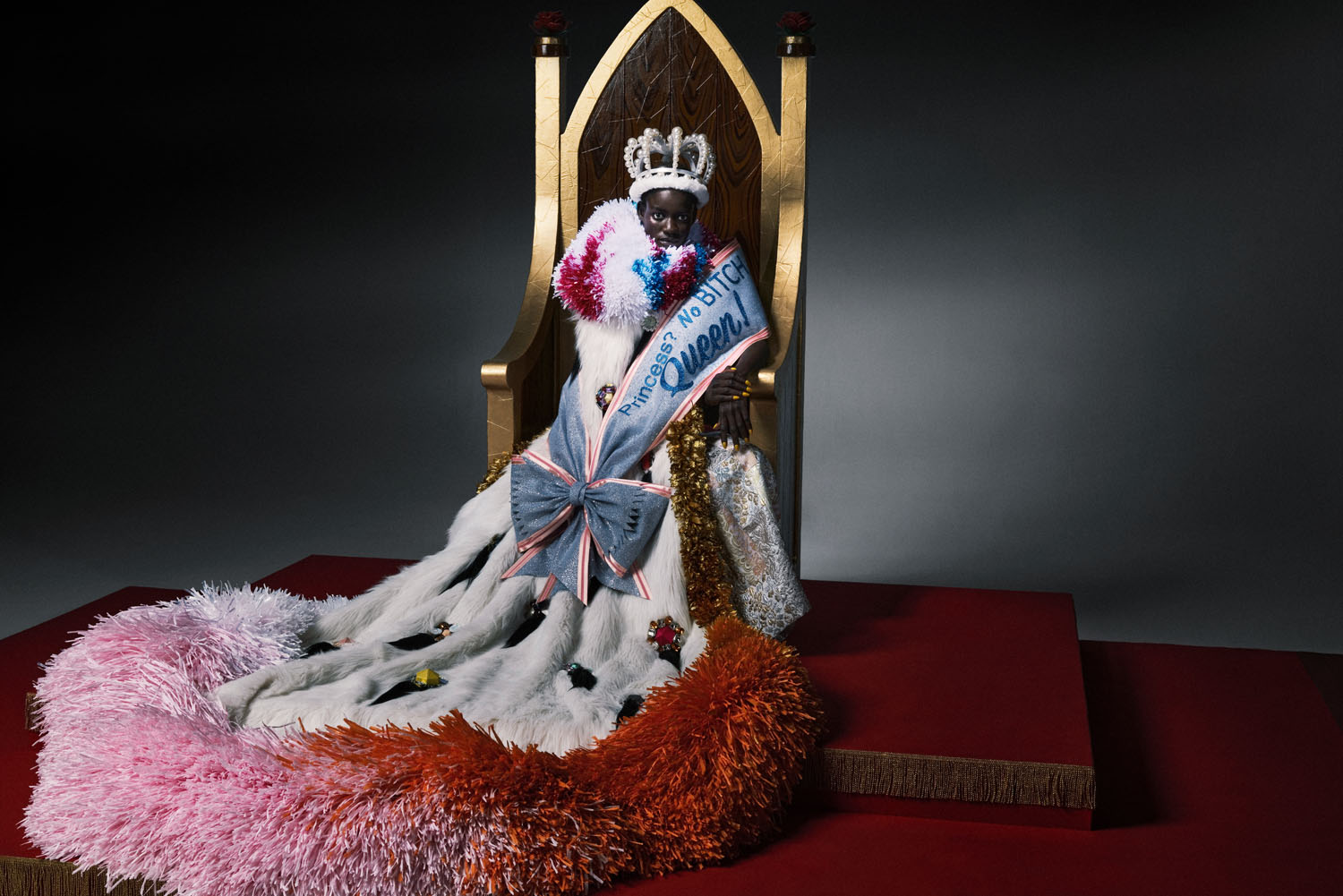
Vast amounts of chunky bling, glittering crowns, furs in all colors, elaborately woven fabrics, oversized bows and sashes, and slogans such as, “Always wear your invisible crown,” comprise Viktor&Rolf’s The New Royals.What is genuinely precious and real in this collection, and what isn’t? Are the designers serious in one garment but ironic in another? One thing is certain: they had a lot of fun making them. These glamorous gowns make any wearer look regal, and yet, they’re so eccentric that we can also see them as a caricature of “royalty.”
Fashion and monarchy have several things in common: strict hierarchy, an entourage, alliances based on power, and undisputed kings and queens. Both constantly supply the media with material, and countless people find them fascinating. But The New Royals collection was also inspired by a new generation of royals: one that is trying to operate more freely while adhering to the strict rules of the court.
- Dolls
-
Dolls
Narrator
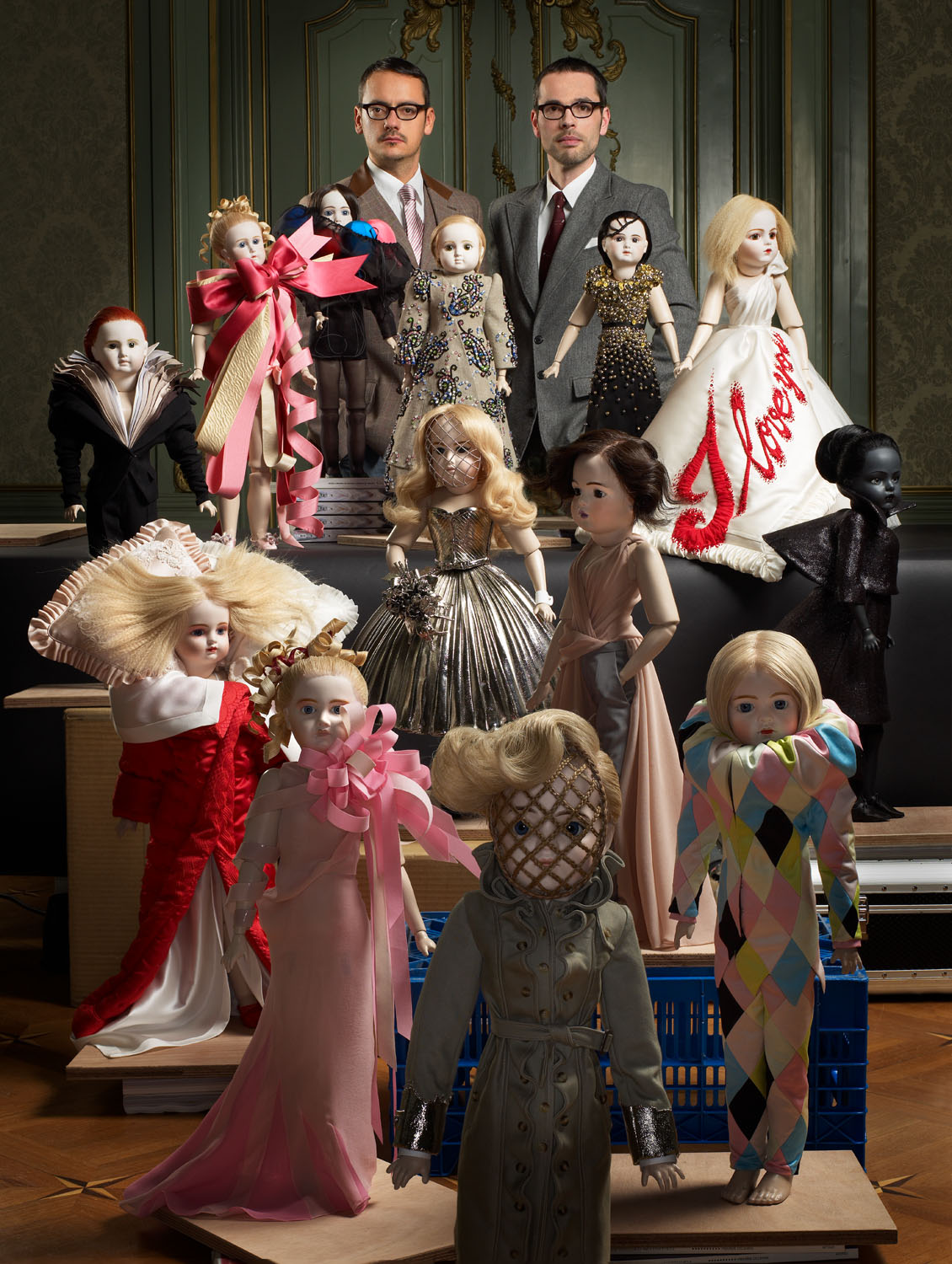
Welcome to the realm of Viktor&Rolf’s dolls! Each one is wearing a dress chosen from past collections, made to scale in the designers’ atelier and including all the original details, from the shoes to the fabrics and embroidery and the hairstyles.The story of the dolls began in 2006, when Viktor&Rolf were invited to present a 2008 retrospective at the Barbican Art Gallery in London:
Viktor
I think we were very interested in, on the one hand, the fleeting nature of fashion, and on the other hand, there is a desire to keep something of all the ideas that we put out into the world, to keep what is normally thrown out after one season.Narrator
Both the designers have been fascinated by dolls since childhood, so the idea of displaying an enormous Victorian dollhouse at the London exhibition seemed obvious.Viktor
So, we started making dolls that are based on antique Victorian dolls. So, it’s like this very serious type of doll—it is not a fun plaything. And we started translating the most iconic designs of every collection and making them as clothes for these dolls. And these became like souvenirs or mementos of every season to keep for the future. And by transforming them from a fashion outfit into a doll’s outfit, it’s almost like you take the fashion aspect out of it. It becomes something else. It’s still recognizable, the garment that was in the show, but at the same time it becomes an exhibit.Rolf
By making contemporary fashion onto Victorian dolls, we made them instantly fashion history. For us, this army of dolls is the best thing we’ve ever done. And for us, this is really the most distilled version of our work to date. - Andreas Gursky
-
Andreas Gursky
Narrator
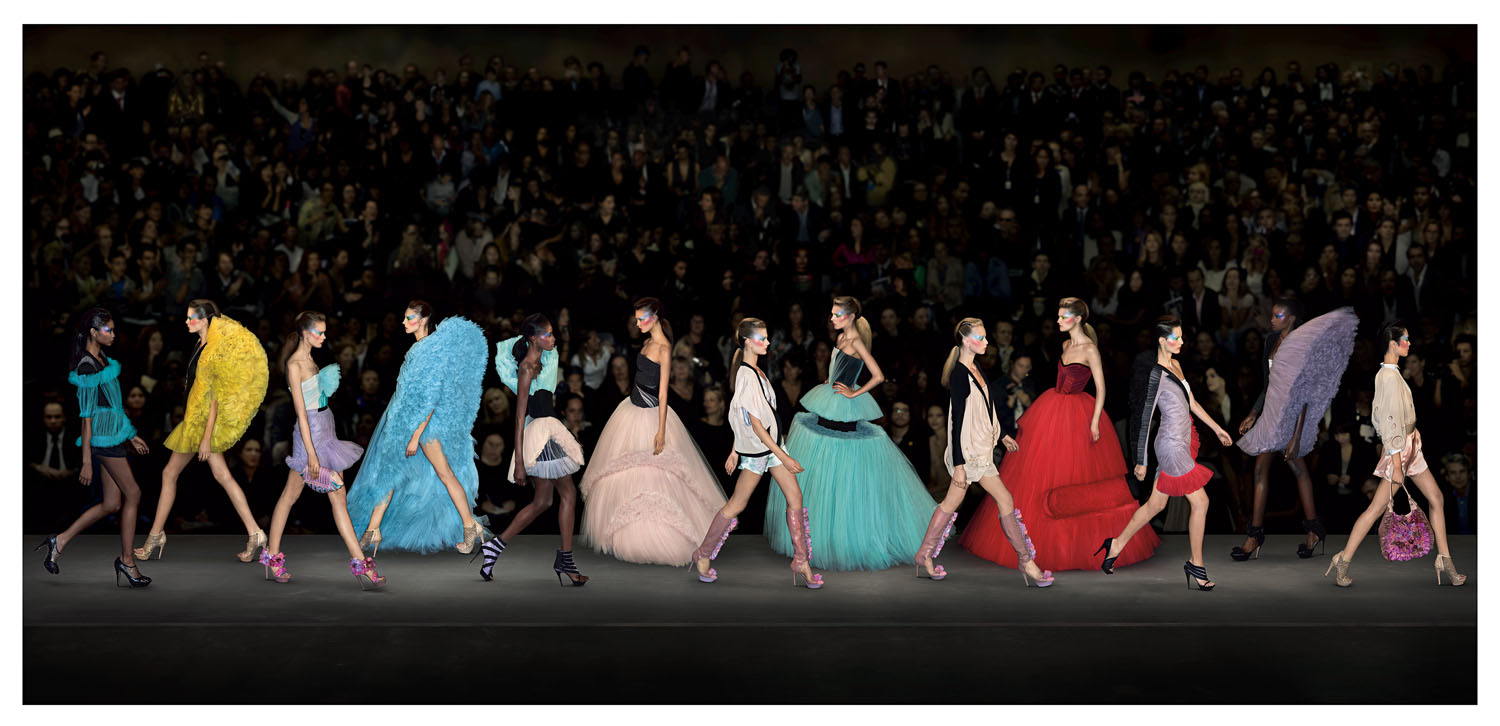
This scene may look authentic, but what you see here never actually happened at the 2011 Cutting Edge Couture show. Andreas Gursky’s photograph is a montage of several individual pictures he took during the performance and later digitally assembled in a different order to create this monumental image. The idea came from Gursky himself.Viktor
He came to the show with his 100,400 cameras. [laughs]Rolf
But it was only like years after that, we saw the photo. We had already forgotten about it.Narrator
Gursky has been working in this technique since the early 1990s. The photographs he takes on location provide him with raw material. And yet his compositions don’t distort reality. They may not show a specific moment, but they do convey the sum of the impressions the photographer internalizes—and they often come closer to reality than the individual shots would be able to. There are, he claims, no arbitrary details in his pictures.Viktor
The Cutting Edge Couture show was, as a matter of fact, it was a ready-to-wear show. By then we had been showing ready-to-wear for a couple of years, and we would always include a section of couture dresses within the ready-to-wear shows because we thought it was a great way to communicate the idea in a more focused way than with ready-to-wear. - Famous Names
-
Famous Names
Viktor
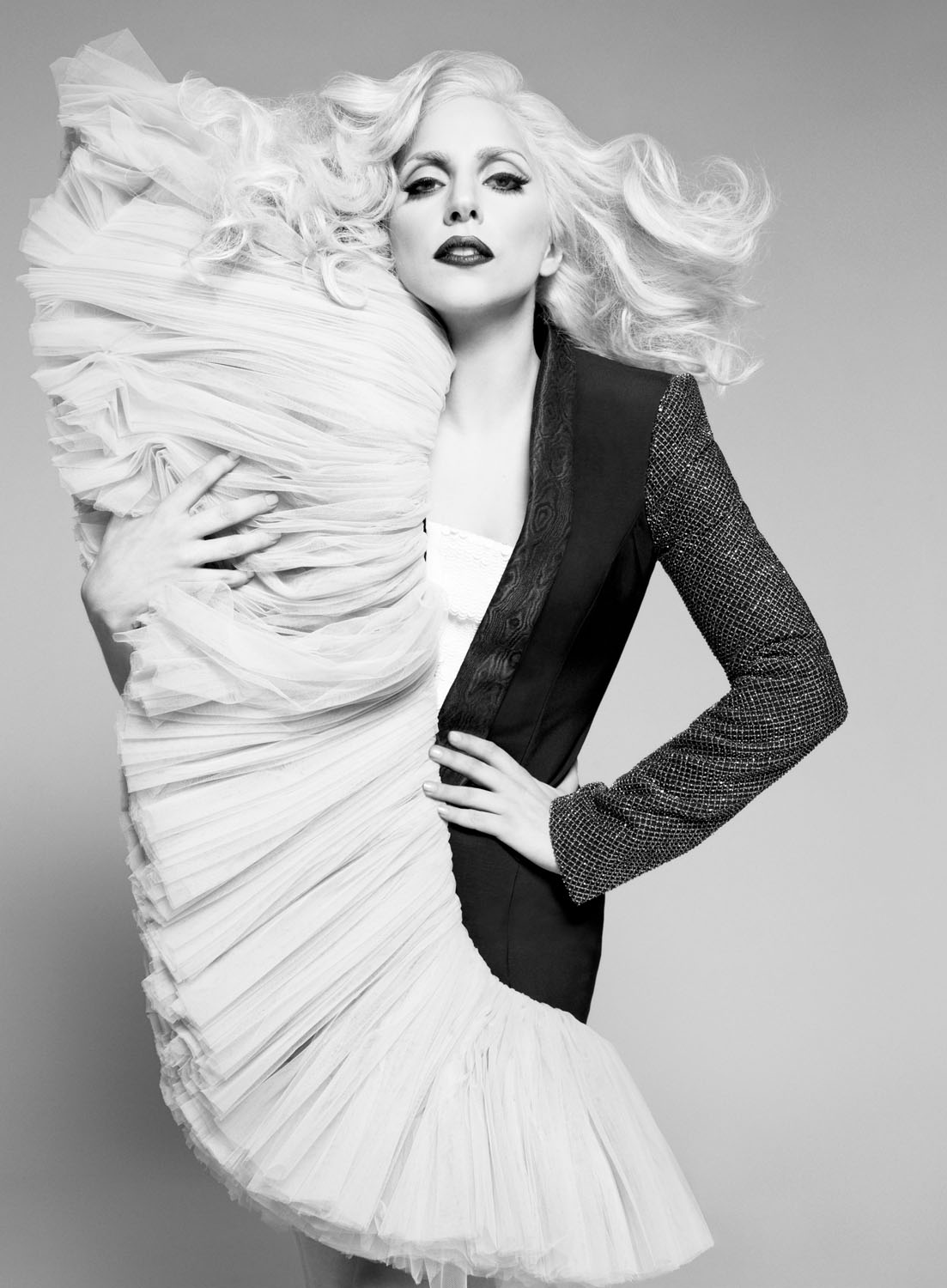
We often work with references to existing garments that we all know and that have kind of a timeless reference. The Grace Kelly tulle ball gown is a reference that we like a lot because it has a certain romance, a certain femininity and—let’s face it, it’s a cliché—and when you play with that, great things can happen.Viktor
We were looking for an element of destruction to these symbols of sweetness and of a certain kind of femininity—that’s very restrictive, obviously. And then we got the idea of, yeah, literally going at the dresses with a chain saw, figuratively speaking, and destroying them but almost like you work in a garden on a bush.Narrator
What does it mean to the designers when famous artists use their fashion?Rolf
For us the work finishes, it’s finished when we designed it, and then it’s really for whoever is interested. And it’s amazing to see people wear it on the catwalk or artists use it in their work, but for us—Viktor
It’s already finished before. I don’t need it, even though obviously, it’s [Rolf crosstalk] it’s a great compliment, or it can be a validation of—obviously that’s great, but it’s their work, so that’s their finished products. Or if a celebrity wears it on the red carpet, it’s them using it. - No Collection
-
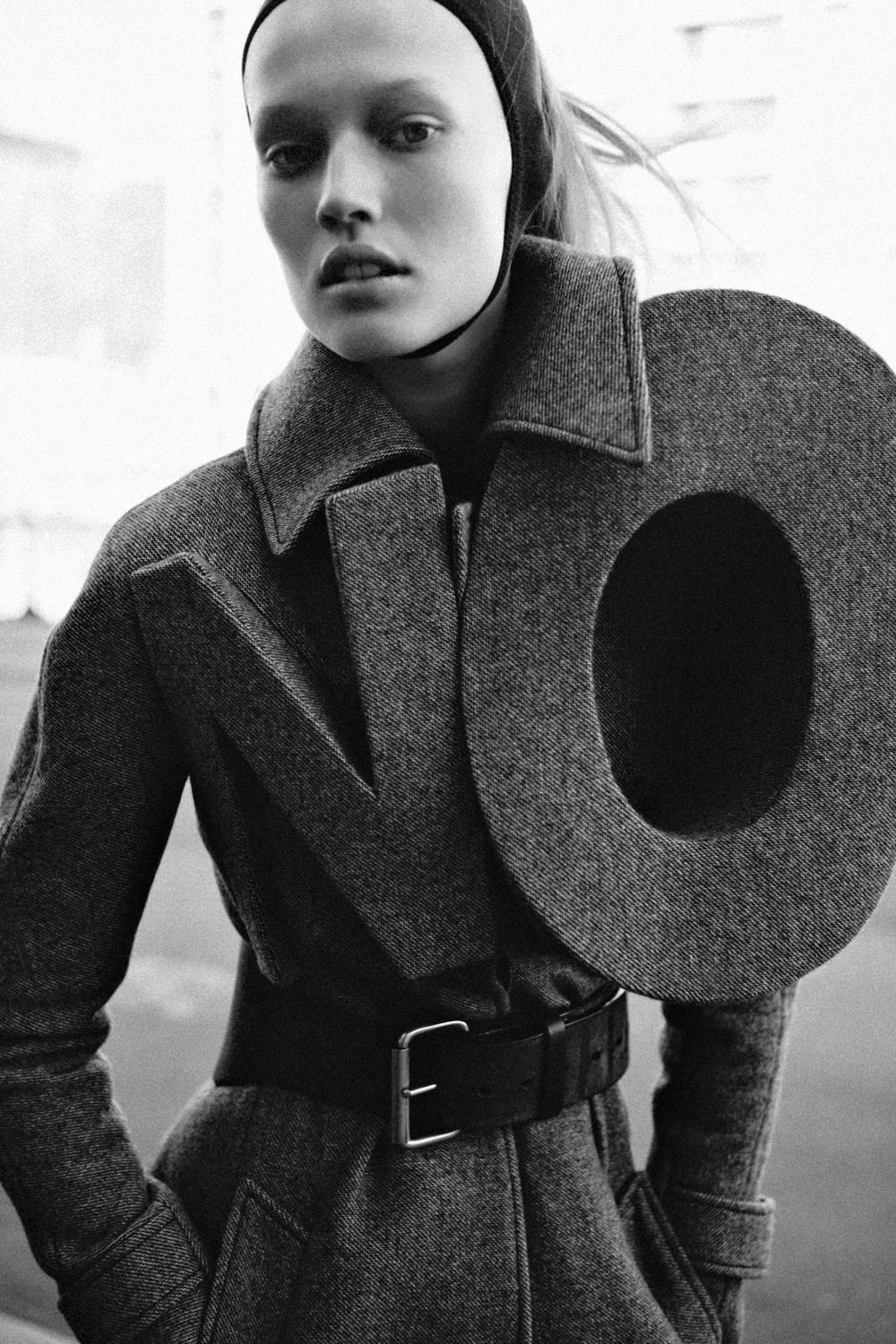
No Collection
Narrator
Viktor&Rolf are passionate about fashion. But time and again, they feel compelled to send the fashion world a resounding “NO.” There was one such moment in 2008.Rolf
At the time, we just really didn’t want to make another collection, but we had to. We already were on strike one season many years ago, so, we felt that was not an option. And on all our sketches, the word “no” came up. So, we were thinking, “Oh, can we incorporate the word ‘no’ in our sketches and in our collection, and maybe the whole collection can be around the word ‘no.’” 3D lettering incorporated in coats and even makeup on the models—it was a very clear statement. And somehow that is the way that we work, and our creativity is our way to process whatever we feel. And we felt that after the NO collection there was, again, much more positivism, and we really felt much more energy after saying “no” for that season. So, it almost felt like therapy.Viktor
The NO collection is a comment on the speed of the fashion industry. By the time of the NO collection, we were fully immersed in the industrial process of the fashion industry, because we had our ready-to-wear-collections with accessories and clothes and men and women and whatnot. And we were starting to feel a lot of pressure because there was a continuous stream of deadlines that needed to be met, and we found it very difficult to reconcile these deadlines with our creativity.Rolf
We had no time to think.Viktor
Exactly. So, the NO collection in a way is addressing this feeling of resistance and trying to utilize it in a positive way, to turn it around and to make something positive and beautiful out of it. This is a good example of the way we work, as we were saying before. So, it’s a comment on fashion, and we’ve worked like that more often. There’s more collections that are a very clear example of how we comment on what fashion is.Narrator
The unequivocal “NO” practically leaps out at you from the gray trench coat. But the collection also includes delicate tulle dresses featuring an ambiguous statement: “Dream on.” - Zen Garden
-
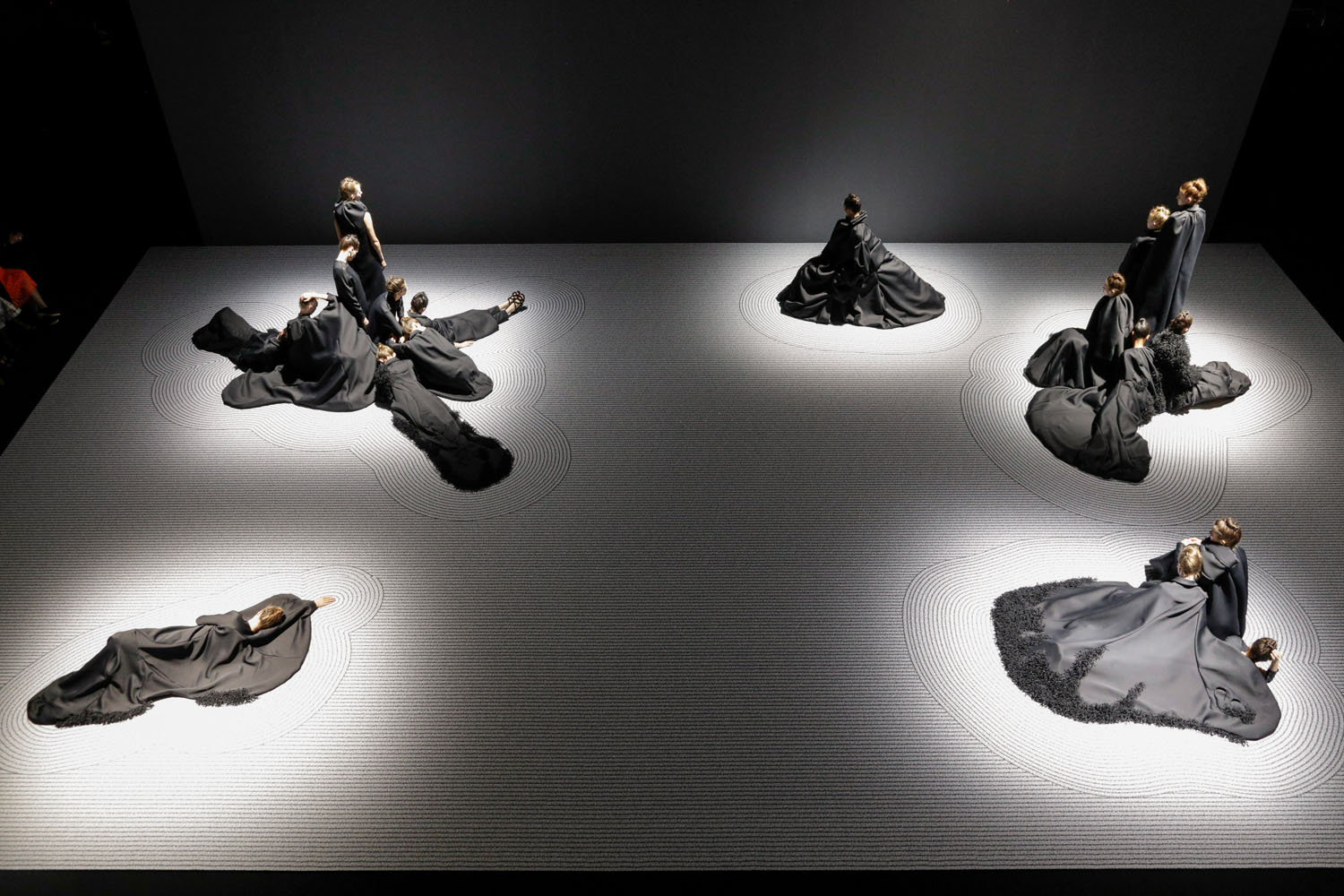
Zen Garden
Narrator
By 2013, it had been years since Viktor&Rolf last showed haute couture. They’d designed more than fifty ready-to-wear collections for women and men, launched fragrances, and opened boutiques. But once the feeling of being constantly under pressure became too much, they arrived at the idea of creating a Zen garden.Viktor
So after a pause of ten years, we started showing haute couture again, and we had stopped our ready-to-wear collection. So to emphasize the fact that couture is very different from ready-to-wear, and that it is like a laboratory for ideas, we decided to focus on the artistic element, on the conceptual element, and to put that to the forefront. We started with a collection called Zen Garden, which was also to celebrate our twentieth anniversary. This collection consisted of twenty outfits, and the twenty outfits were placed by us in a setting that was reminiscent of a Japanese Zen garden. Put together in certain formations, the garments were reminiscent of the Ryōanji garden in Kyoto. And it was intended to project a feeling of serenity and calm.Rolf
We chose the concept of a Zen garden because we wanted to leave the fast-paced fashion industry and feel our own rhythm and focus on what we wanted to say instead of—because we felt that we were running behind deadlines all the time, and we just didn’t want to do it anymore.Narrator
At the beginning of the show, Viktor&Rolf sat in meditation on a large surface imitating the perfectly raked gravel of Japanese Zen gardens. One by one, twenty models entered the scene and paused as the designers posed them. Only when they had assumed their final positions—some lying, others sitting, kneeling, or standing—did the audience realize that the unusual style of the garments had been developed precisely for those positions. The models formed a tableau vivant, a living picture reminiscent of the formations in one of Japan’s most beautiful rock gardens.Viktor
The entire collection was made in one fabric. All the outfits were intended to look like rock formations. And we played with details that were supposed to look like grass and rocks. But all of this was made from one and the same fabric. So, these were very labor-intensive details. The pattern cutting in this collection is quite peculiar because we wanted the models to take certain positions in the Zen garden. All of the patterns are cut to suit the position of the models. So, the garment would have a perfect fit, so to speak, once the model was in a position that we intended her to be. And once she was standing up, this would cause very unexpected draperies to occur. What’s also interesting detail is that there’s not one straight seam in this collection. Everything is rounded and has organic shapes to emphasize the feeling of nature.Narrator
The heavy black fabric of the Zen Garden collection resembles neoprene, creating smooth surfaces that glisten like wet rock. Some of the gowns are elaborately embroidered to appear as moss. The staff at the atelier spent several hundred hours working on the garments.Viktor&Rolf don’t favor one particular fabric over others. At the drawing stage, they develop an initial feeling for the fabric of a collection: should it be solid or delicate, transparent or opaque, a heavy cotton satin, delicate tulle, no-nonsense jute, some uncommon material, or something synthetic such as PVC? In principle, they prefer firm fabrics that make it easier to shape their sculptural gowns. And as unusual as their ideas may be, the designers have no doubt that if they can draw it, their atelier will be able to make it.
- Action Dolls
-
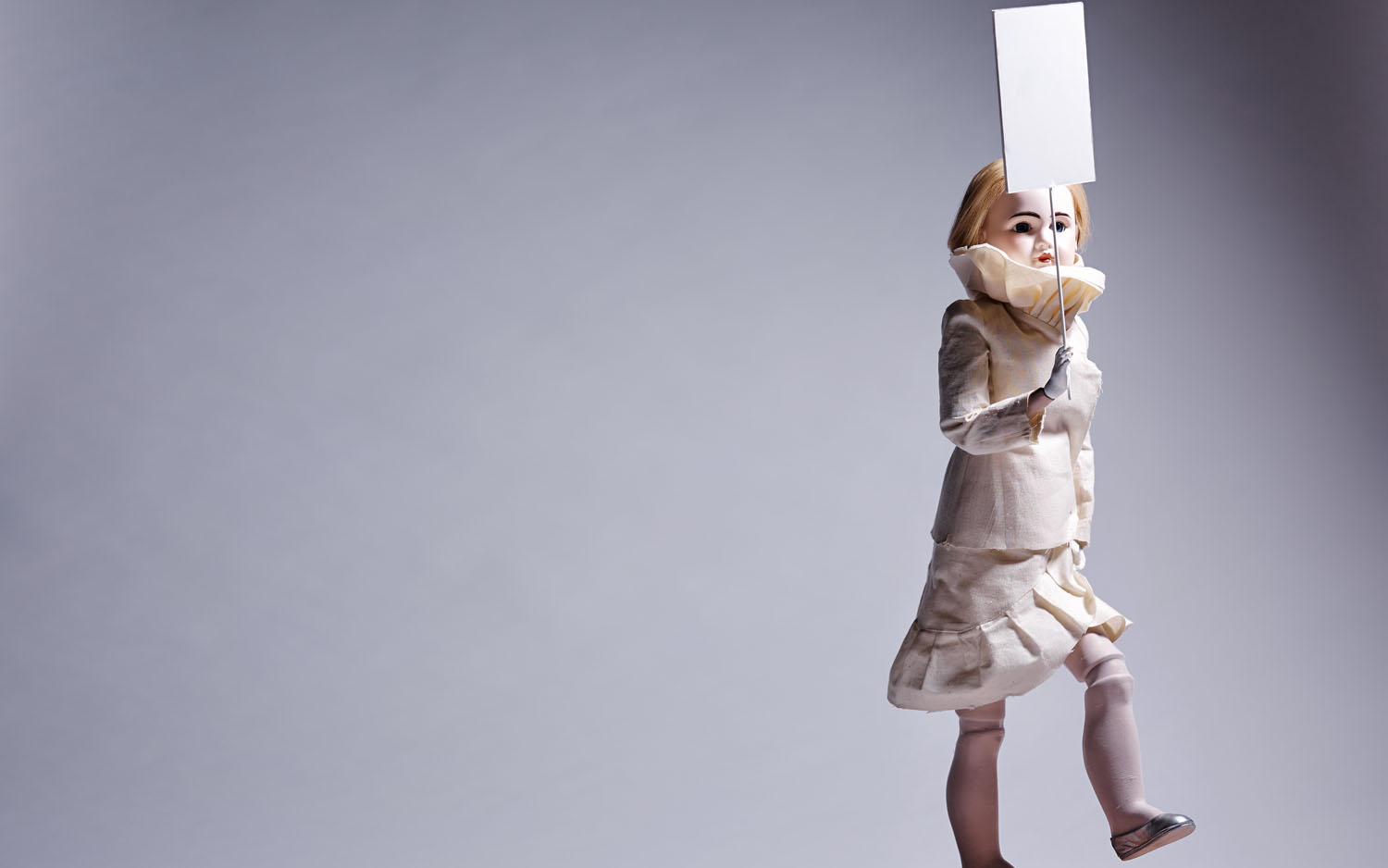
Action Dolls
Narrator
In 2017, dolls featured once again in Viktor&Rolf’s haute couture collection Action Dolls. At the beginning of the show, the models took to the catwalk wearing oversized, googly-eyed heads, a playful troupe of large mascots in voluminous winter jackets and coats.For the second walk, the models reappeared without the huge heads, instead with hair slightly tousled, jackets and coats open over jeans and T-shirts, and casual boots, a look that perfectly complemented the designers’ interpretation of the legendary bomber jacket.
Viktor&Rolf use fashion as a medium to express ideas. Exhibiting their creations in miniature on Victorian dolls was one way to “freeze time,” as they put it. But they also wanted to counter the fast-moving fashion industry.
- Le Parfum
-
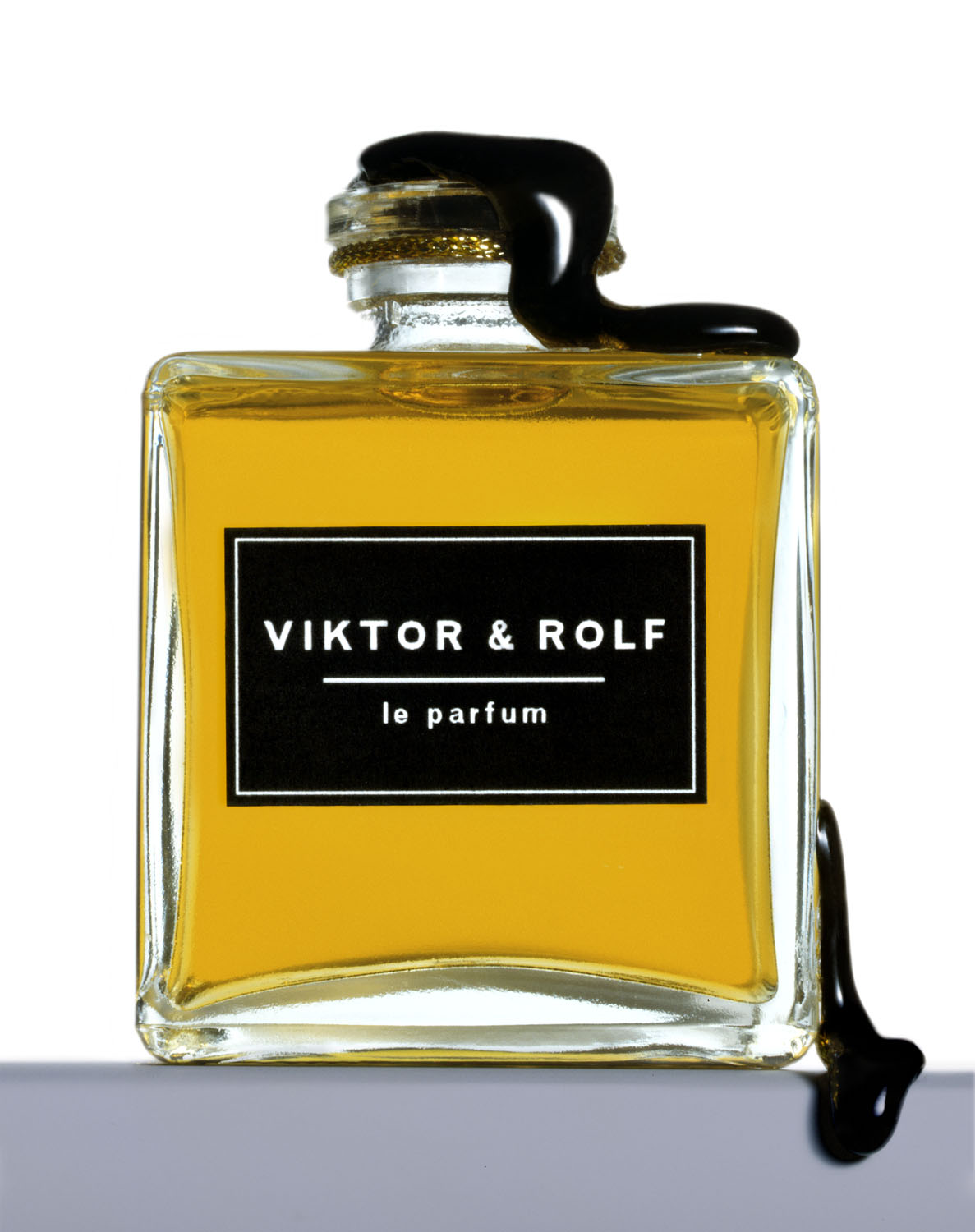
Le Parfum
Narrator
What is the essence of a fashion label? What do designers need if they are to be successful? Those were the questions Viktor and Rolf asked themselves when they had the opportunity to exhibit at an Amsterdam gallery in 1996. Their answer was, you need a collection, of course, but you also need a catwalk to show it on, a studio where it can be photographed, a shop to sell it in—and a fragrance.Viktor
After winning the contest in Hyères in 1993, we took approximately five years to experiment. And we did all kinds of things: we made collections, we made clothes, but we also made installations, videos, pictures—we worked a lot. Our work was presented more in the art world than in the fashion world. And one particular exhibition is interesting. The title is Launch.We were invited by Torch Gallery in Amsterdam, and they gave us carte blanche. And we were struggling with our ambitions to be fashion designers, but we were not able to find our way in the fashion system. We didn’t know how to—we didn’t know how to connect. So, we decided for the course of this exhibition to materialize our ambitions and our dreams, and we did this on miniature scale. And we said to ourselves, if these ambitions are not reality yet, at least we can make them reality for the duration of the exhibition. So, there was a miniature installation of a shop; there was a miniature installation of a catwalk show, that was also not happening; there was a miniature installation of a photo shoot with our clothes—all the things that we really wanted to happen but that were not happening.
And we also made an installation of a fake fragrance: Viktor & Rolf: Le Parfum. And for some reason we decided to make this installation not miniature but life size. The fragrance is in a bottle, and the bottle is sealed hermetically—you cannot open it. So, it’s an eternal question what’s inside. And we tried to make the presentation as professional as possible because we really wanted it to be very seductive and glamorous.
Narrator
This fake perfume, produced in a limited edition of 250 bottles, sold out quickly. And over time, everything else the design duo had wished for also came to pass: the collections, the photo shoots, the shows. But what really attracted attention was their Flowerbomb fragrance. - Because We're Worth It
-

Because We're Worth It
Viktor
After we did five couture shows at the end of the nineties, our career took off [laughs] big time, very fast, very fast in a very short amount of time. A lot of things happened in a short amount of time. We started doing ready-to-wear, and fairly soon there was interest from L’Oréal. They started following our shows. And um—Rolf
And they had seen the fake perfume ad.Viktor
So at some point they proposed us to work together to develop fragrances because they said, “You are storytellers, and that’s what we need.” Before signing the contract, we were asked to make a short presentation of our work for the CEO and the management. So, we had a video with all shows and all the highlights, and we ended with the shot of the two of us looking into the camera, saying, “Because we’re worth it.” That’s the catchphrase we associate with L’Oréal. And apparently that’s what did the trick for the CEO at the time.When we started working on the fragrance with L’Oréal in 2003, we were asked, “What is it that you would like?” And we said we want a big opulent fragrance; we want an explosion of flowers, but we don’t want it to be only romantic, soft, and let’s say, all the things that you associate with flowers. We want all of that, but we also wanted to have a certain aggression, to have a rough edge to it. We realized “Flowerbomb” is actually a fantastic name because it’s a new word, and it expresses, in a very simple way, basically, exactly what it is that our work is about. Like you put things together that are each other’s opposite, and when you do it in a good way, something new happens, something new occurs.
Rolf
Our first perfume, Flowerbomb, was launched, and it was our aim to show people that for us, fragrance is not separate from fashion, and in fact, it’s all the same universe, and we work on it with the same intention and ambition. So, we proposed to launch Flowerbomb with a fashion show and visualize Flowerbomb and what it means to us—the transformation from negative into positive. And we had a show in all black, ending with . . .Viktor
A tableau vivant?Rolf
Yeah, a tableau vivant—Viktor
Of all the black models, [crosstalk] all the models dressed in black.Rolf
Then there was a moment where the set switched, and it turned, and the same tableau vivant was there in pink tones, and then the show ended with the pink version of what you had just seen in black. And that was quite a moment and very important for us. - Le Parfum
-
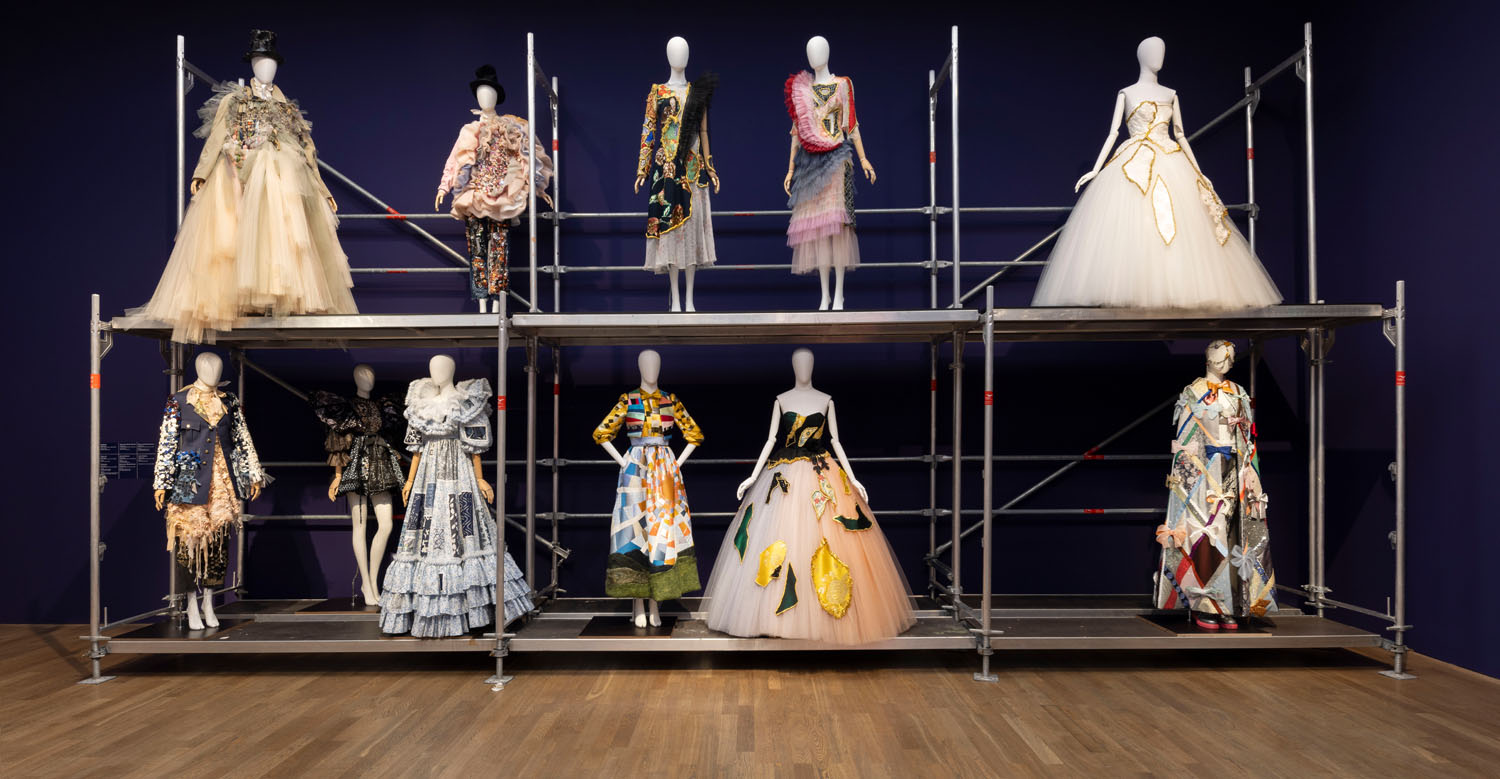
Vagabonds /
Boulevard of Broken DreamsNarrator
The term haute couture refers to precious fabrics and priceless accessories, not second-hand materials. For Viktor&Rolf, however, combining all these elements wasn’t a contradiction. Quite the opposite:Rolf
Upcycling has been important in our work from the very start. Our collection for the Festival d’Hyères already had vintage clothing that we used to make new proportions. We have used existing vintage fabrics in several collections, parts of vintage garments pieced together in new ways.Narrator
One highlight of their Upcycling Couture was the 2016 Vagabonds collection, in which the designers went all out to create something new: sweeping ball gowns made from old trench coats and colorful fabrics, woven and braided from ripped silk, decorated with crystals and buttons, and pieced together into patchworks. The collection is like a jigsaw puzzle from scraps of their earlier work: a look back.Viktor
We designed a collection that we now call Vagabonds, and we decided that for that particular collection, we were not going to buy any new fabrics, but we were going to use our archive. We had built up an archive of twenty-five years, and we also wanted to look back at what we had done, like you look at your own history, literally by looking at these fabrics. And, so, we just used everything we had from twenty-five years ago or like the last season. And we ripped everything up and made new weavings out of these old fabrics, and this became the Vagabonds collection. We like the idea that the fabrics are a bit like memories, and you weave all of them together, and whether they’re memories from yesterday or from twenty-five years ago, everything, like in your mind, everything mixes up.In the same way, we used old accessories like buttons, and we put all of them together and created embroideries out of them, and you get like a new texture, like an embroidered texture, that gives a couture feeling. And only in close-up do you see, oh it’s all gold buttons. So you lose the individual character of the element, and it becomes something new and decorative.
Narrator
A year after Vagabonds, Viktor&Rolf went a step further. For their summer collection Boulevard of Broken Dreams, they adopted the principle of Japanese kintsugi. This involves rejoining pieces of broken pottery using a lacquer mixed with precious metals such as powdered gold, so that, rather than blending seamlessly, the areas of repair become a prominent feature. Kintsugi embodies an attitude of celebrating imperfection by transforming it into something beautiful. This idea appealed to Viktor&Rolf. They took vintage cocktail dresses and evening gowns with clear signs of wear, had them unpicked, and used them to create garments that look playful, with seams and repairs accented in gold.The designers are always thinking about more than just their next collection. They constantly reflect on their role in the fashion industry, on what fashion means to them, and on how they can address social issues in their creations. One persistent issue is sustainability.
Viktor
I think we like the idea of using something existing—whether it’s a reference to an existing garment or a stereotypical garment, but also fabrics that have a history. Like in the First Couture collection we did, we used fabrics that were used by Balenciaga, for instance, from a manufacturer that he would work with. We like this historical reference. We also used Yves Saint Laurent fabrics—that was more of an ironic statement, where you take something from another designer and you utilize it in a different way, completely different from the way he would use it probably. If I go back further, there was also like found lace that was used in a very abstract way to destroy a silhouette. It’s also to use something that you find readymade and then take it completely out of context. - Freischütz
-
Der Freischütz (The Marksman)
Narrator
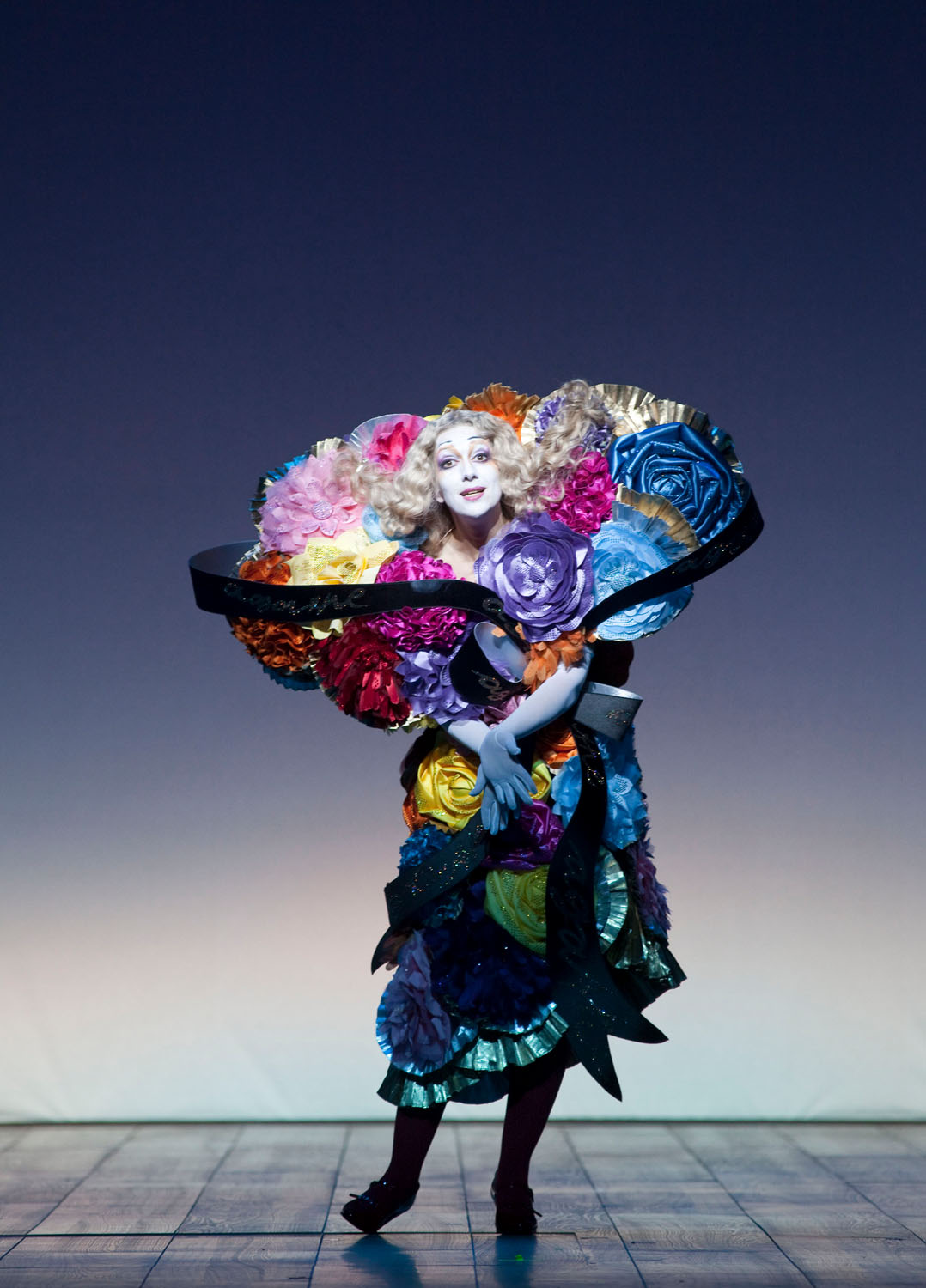
Trees and flowers, the devil as a bolt of lightning, and among it all, Agathe, enveloped in a dazzling bouquet of flowers. Welcome to the Freischütz! When American director Robert Wilson asked Viktor&Rolf to design the costumes for his production of this classic opera at Festspielhaus Baden-Baden, the duo knew nothing about it. Nevertheless—having previously worked with Wilson on a production for the Nederlands Dans Theater—they were fascinated by the magical worlds he created and immediately agreed.Viktor
We did Der Freischütz with Bob, and again, we made drawings that were quite extreme. But by now we thought, “OK, if anyone can handle this, it’s Bob.” And, again, he was like, “OK, let’s go for it.” The costumes for Der Freischütz are—they’re hardly costumes; they’re more like indications of the character, the role in the play. They’re very abstract, and we designed them with Bob Wilson’s aesthetic in mind, knowing how rigorous and how bold and how stark it is, but also how, in a way, romantic and how colorful, and what a magician he is with light. We felt that it would be a great juxtaposition between the costumes and his stage design.Rolf
It’s more symbolic than really made for a person. It’s like you design a symbol.Viktor
Which is also the way he approaches the actors and the singers on stage. They’re almost more ideas than humans, like singing ideas or acting ideas.Narrator
Carl Maria von Weber’s Der Freischütz is regarded as the prototypical German romantic opera and the first German national opera; this fact inspired Viktor&Rolf, who wanted to create a world between kitsch and abstraction while capturing the fantastic light of Wilson’s set design:Viktor
So, there was a very generous amount of crystals that we added to the costumes. We always say it’s like you sprinkle magic dust on a finished product.Narrator
The costumes are liberally studded with Swarovski crystals, especially Agathe’s floral bouquet. “Spectacular” was the verdict of soprano Juliane Banse, who embraced the challenge of singing in her heavy costume. Viktor&Rolf’s theatrical designs enhanced the magical romance of this opera, and this is just one of many examples in which the duo has thrilled audiences and evoked standing ovations.This brings our tour of the world of Viktor&Rolf to an end. Thank you for joining us!
Viktor
This was our exhibition Fashion Statements. We hope you enjoyed it.