ExhibitionsThe Family Album of Ralph Eugene Meatyard 
Current Exhibition

The Family Album of Ralph Eugene Meatyard 

December 12, 2025 – May 10, 2026

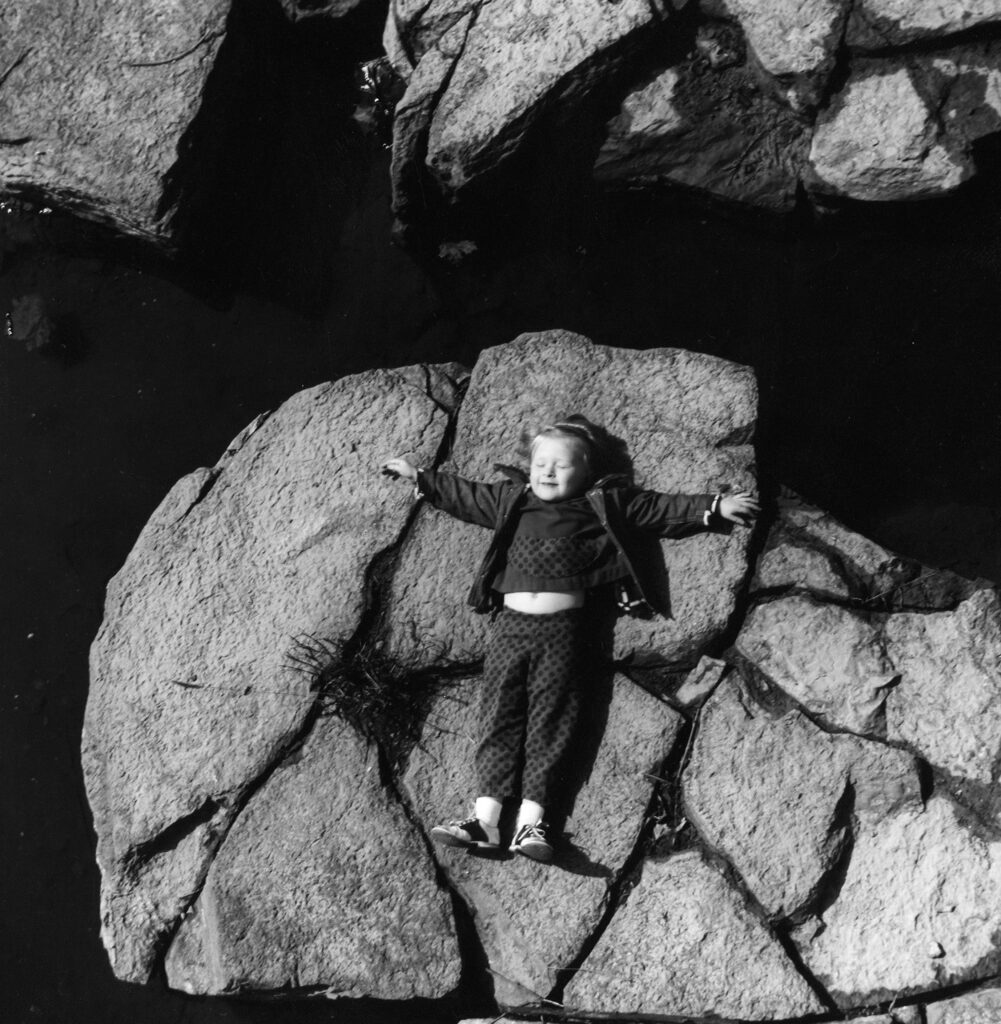
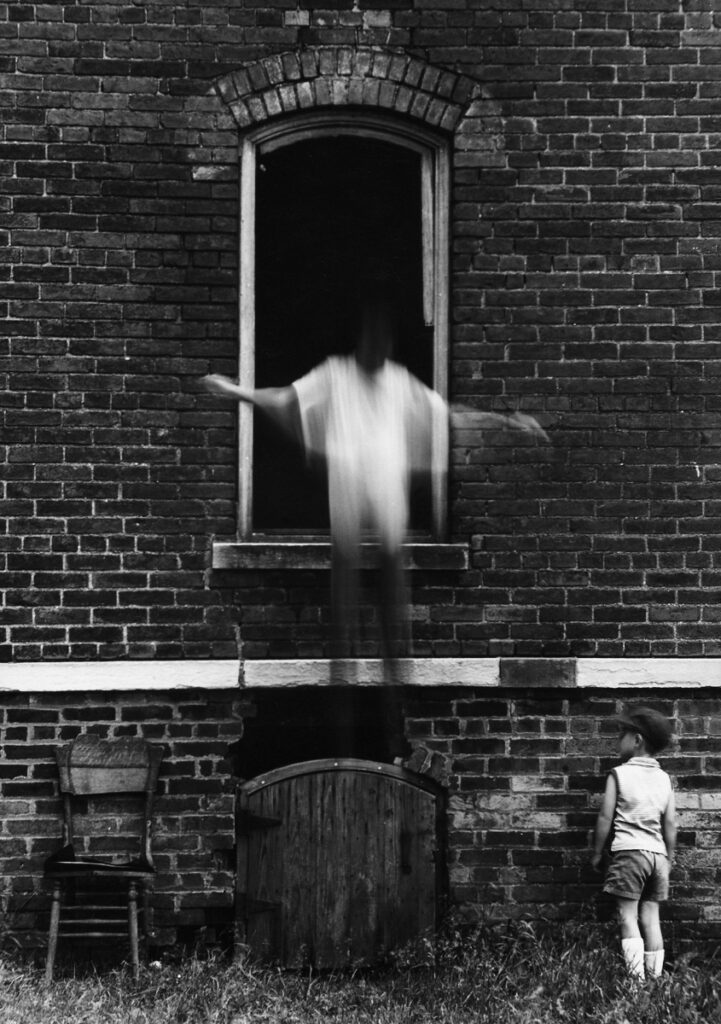
A largely self-taught photographer, Ralph Eugene Meatyard (American, 1925–1972) was a pioneering and inventive artist who created some of the most original images of the mid-twentieth century. His work defies easy categorization as he experimented across various genres and subjects, and throughout his career, he maintained the ethos of an amateur, approaching photography with a sense of affection, discovery, and surprise. He is best known for his staged scenes that suggest an absurd fantasy set in the dilapidated houses and banal suburban environs near his home in Lexington, Kentucky. These scenes, often featuring his family as actors and using props such as masks and dolls, reveal Meatyard’s search for inner truths amid the ordinary.

This exhibition, coinciding with the artist’s centenary, features the thirty-six prints that comprise the artist’s first monograph (Gnomon Press, 1970)—one of only two books he published in his lifetime—which Meatyard intended to stand as his definitive artistic statement. All thrity-six prints were recently acquired by the High for the Museum’s permanent collection. Through his idiosyncratic selection of images, this exhibition explores how Meatyard’s singular approach and voracious curiosity expanded photography’s expressive and conceptual potential.

I seek to create a picture that has implications which may be explored for a new concept of thinking – a picture seen largely from the subjective viewpoint. The man of ideas and ideals will search for and find elements of his imagination in segments of the actuality around him. My pictures are an extension of myself and invite the viewers to participate in my thinking about the object pictured.

—Ralph Eugene Meatyard, Lexington Camera Club, Creative Photography—1956 catalogue statement

Self-Portrait (Frontispiece),
ca. 1964–1966

As an optician by profession, Meatyard’s photography training was largely self-taught. He grew up in Normal, Illinois, and eventually moved to Lexington to take a job at the Tinder-Knaus-Tinder optical shop. Through his occupation, he became fascinated by visual perception, but he did not pick up a camera until the early 1950s when his first son, Michael, was born. He began experimenting with photography and joined the Lexington Camera Club, a group of serious amateur photographers that met regularly to share their work. Meatyard made this self-portrait outside a warehouse in downtown Lexington. The composition, with the artist standing next to the word yard, is a playful visual take on his unusual surname.

Ralph Eugene Meatyard (American, 1925–1972), Self-Portrait (Frontispiece), ca. 1964–1966, gelatin silver print, Purchase with funds from Joe Williams and Tede Fleming, Jane and Clay Jackson, and an anonymous donor, 2025.167. © Estate of Ralph Eugene Meatyard.

Pa.pho.2025.17 Self Portrait (frontispiece) O2

Untitled (Plate 17), 1962

Meatyard suffered a heart attack in 1961. After this brush with mortality, he gave himself ten years to master photography. A sense of anxiety runs through many of his photographs. This image of a vacant masked face with hands pressed against its cheeks and a shard of broken mirror floating above embodies the persistent sense of pressure and tenuousness motivated by the finiteness of time.

Meatyard began editing the Gnomon Press book soon after he was diagnosed with cancer in 1970, and the looming reality of his fragility no doubt informed his selection of images. Arnold Gassan echoed the need to confront death in the longer, unpublished version of his essay for the book.

Ralph Eugene Meatyard (American, 1925–1972), Untitled (Plate 17), 1962, gelatin silver print, Purchase with funds from Joe Williams and Tede Fleming, 2025.184. © Estate of Ralph Eugene Meatyard.

Untitled (Madonna, Plate 34), 1964

While Meatyard regularly photographed his family, his pictures are rarely conventional portraits and are not necessarily indicative of his relationships. Even when he wasn’t including masks, he often obscured his sitters’ identities by skillfully deploying exposure, shadow, depth of field, or motion blur. In this silhouetted image, his wife, Madelyn, and their daughter, Melissa, become the archetypal mother and daughter, their fused forms expressing intimacy and connection. The title of the piece, Madonna, and Meatyard’s use of the arched window as a framing device indicate his desire to place his work within an art historical lineage.

Ralph Eugene Meatyard (American, 1925–1972), Untitled (Madonna, Plate 34), 1964, gelatin silver print, Purchase with funds from the Donald and Marilyn Keough Family Foundation, 2025.201. © Estate of Ralph Eugene Meatyard.

I adhere to the techniques of the earliest and most sincere workers of the camera—straight, unmanipulated pictures. That which I present is that which I see. However, I work a great deal in romantic-surrealist as well as abstract for I feel that ‘more real than real’ is the special province of the serious photographer.

—Ralph Eugene Meatyard, quoted in Beaumont Newhall, “New Talent in Photography USA,” Art in America 49, no. 1 (1961)

Untitled (plate 18), 1963

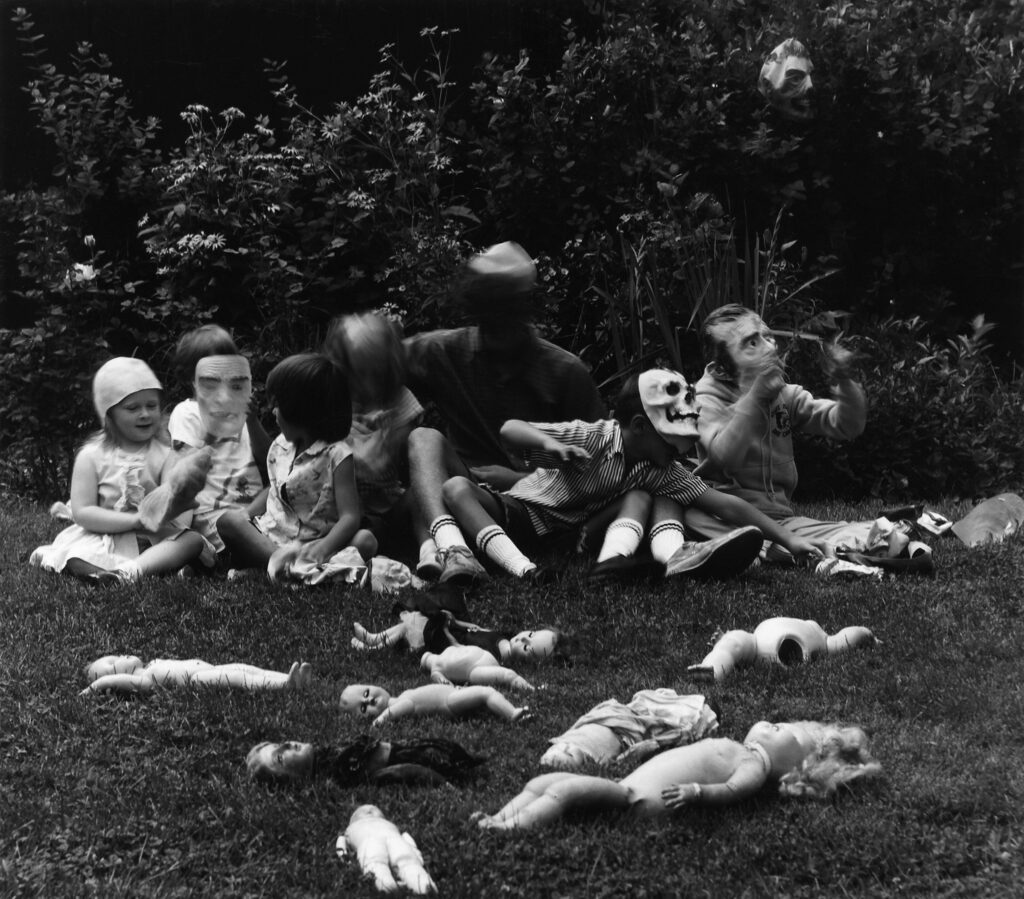
The Meatyards did not keep a photo album, but they were probably photographed more than the typical family. Like any good family photographer, Meatyard took advantage of special occasions. He constructed this curious image in the family’s backyard during a gathering, likely one of Melissa’s birthday parties. Meatyard eschewed the conventions of family portraiture, forgoing affectionate smiles and tender embraces for the disquieting arrangement of masks and dolls here. Nevertheless, just like a family snapshot, he purposefully directed the scene to construct a new reality, though one that is more mysterious and unsettling than idealized.

Ralph Eugene Meatyard (American, 1925–1972), Untitled (plate 18), 1963, gelatin silver print, Purchase with funds from an anonymous donor, 2025.185. © Estate of Ralph Eugene Meatyard.

Untitled (plate 7), 1963

Ralph Eugene Meatyard (American, 1925–1972), Untitled (plate 7), 1963, gelatin silver print, Purchase with funds from Joe Williams and Tede Fleming, 2025.174. © Estate of Ralph Eugene Meatyard.

Plate 7 1965

Untitled (plate 1), 1960

Ralph Eugene Meatyard (American, 1925–1972), Untitled (plate 1), 1960 , gelatin silver print, Purchase with funds from Purchase with funds from Jane and Clay Jackson, 2025.168. © Estate of Ralph Eugene Meatyard.

Pa.pho.2025.18 Plate 1 1960 (1) O3

This exhibition is organized by the High Museum of Art, Atlanta.

Premier Exhibition Series Sponsor 

Major Exhibition Series Supporters

Sarah and Jim Kennedy

Premier Exhibition Series Supporters

Benefactor Exhibition Series Supporters

Robin and Hilton Howell

Ambassador Exhibition Series Supporters

Mrs. Harriet H. Warren

Contributing Exhibition Series Supporters 

Farideh and Al Azadi
Mary and Neil Johnson
Mr. and Mrs. Baxter Jones
Megan and Garrett Langley
Margot and Danny McCaul
Wade A. Rakes II and Nicholas Miller

Generous support is also provided by  

Alfred and Adele Davis Exhibition Endowment Fund, Anne Cox Chambers Exhibition Fund, Barbara Stewart Exhibition Fund, Dorothy Smith Hopkins Exhibition Endowment Fund, Eleanor McDonald Storza Exhibition Endowment Fund, The Fay and Barrett Howell Exhibition Fund, Forward Arts Foundation Exhibition Endowment Fund, Helen S. Lanier Endowment Fund, John H. and Wilhelmina D. Harland Exhibition Endowment Fund, Katherine Murphy Riley Special Exhibition Endowment Fund, Margaretta Taylor Exhibition Fund, RJR Nabisco Exhibition Endowment Fund, and USI Insurance Services.