
In his popular nineteenth-century drawing manual Lessons on Trees (1850), James Duffield Harding describes trees as among the most difficult of artistic subjects. Each root, trunk, branch, twig, and leaf is unique, making the depiction of both the collective appearance and the distinction between these elements an artistic challenge. Exploring the artist’s way of seeing the natural world, Paper Trees investigates the idea of the tree study in American art, from practice sketches made en plein air (in open air) to finished works in a variety of media. Emphasizing technique and process, the exhibition reflects changing schools of thought in the representation of nature from the late nineteenth to the mid-twentieth century, a period that also saw rising public interest in an emerging American conservationist movement. In tracing the relationship between these cultural and artistic developments, Paper Trees considers the potential of art and design to convey a visual translation of the natural world.
Paper Trees
July 31, 2026 – February 21, 2027
William Thomas Livesay (American, born Richmond, Virginia, 1956), Large Oak Tree, 1985, etching, engraving, and watercolor on paper, High Museum of Art, Atlanta, gift of Katherine and Richard B. Jones, 1986.69.
Tickets
Buy NowMembers and Museum Pass: Free
Not-Yet-Members: $23.50
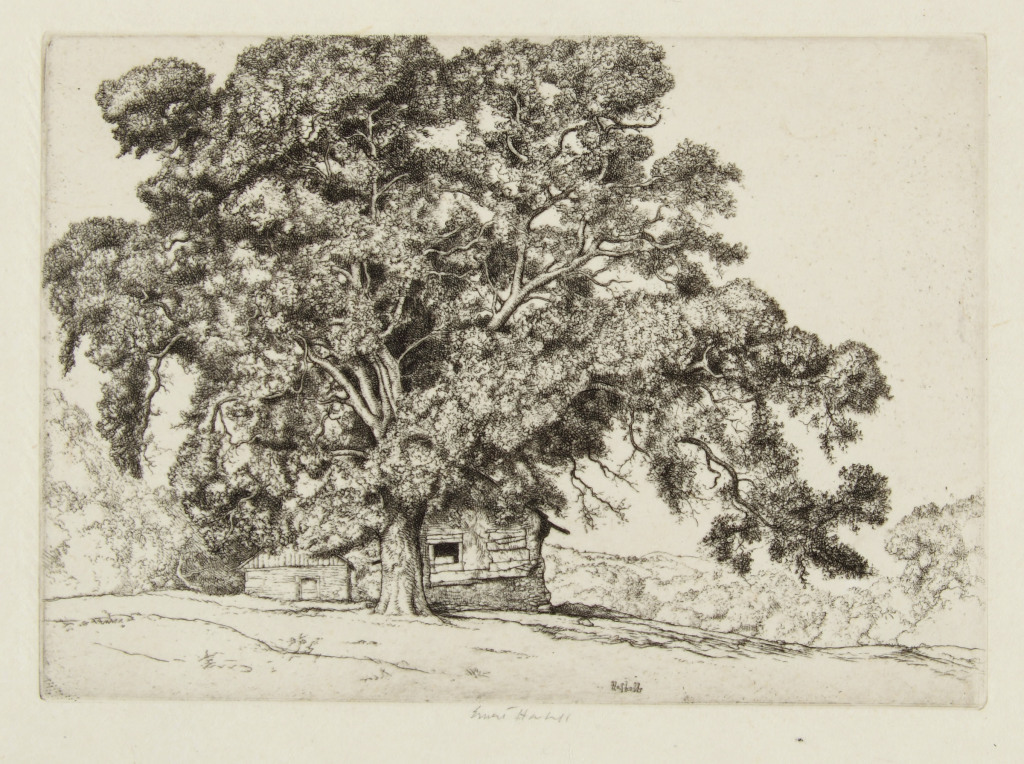
The Oak and the Adobe, 1919
Ernest Haskell worked across multiple media: watercolors, lithographs, drawings, engravings, and, his best-known medium, etchings. The Oak and the Abode shows a gigantic oak tree embowering a rural home, suggesting the dual role of nature as comforter and protector. Haskell’s reputation as a leader of American etching is clear in this work with its exceptionally detailed depiction of shadow, light, texture, and perspective.
Ernest Haskell (American, born Woodstock, Connecticut, 1876–1925), The Oak and the Adobe, 1919, etching on paper, High Museum of Art, Atlanta, 58.89.
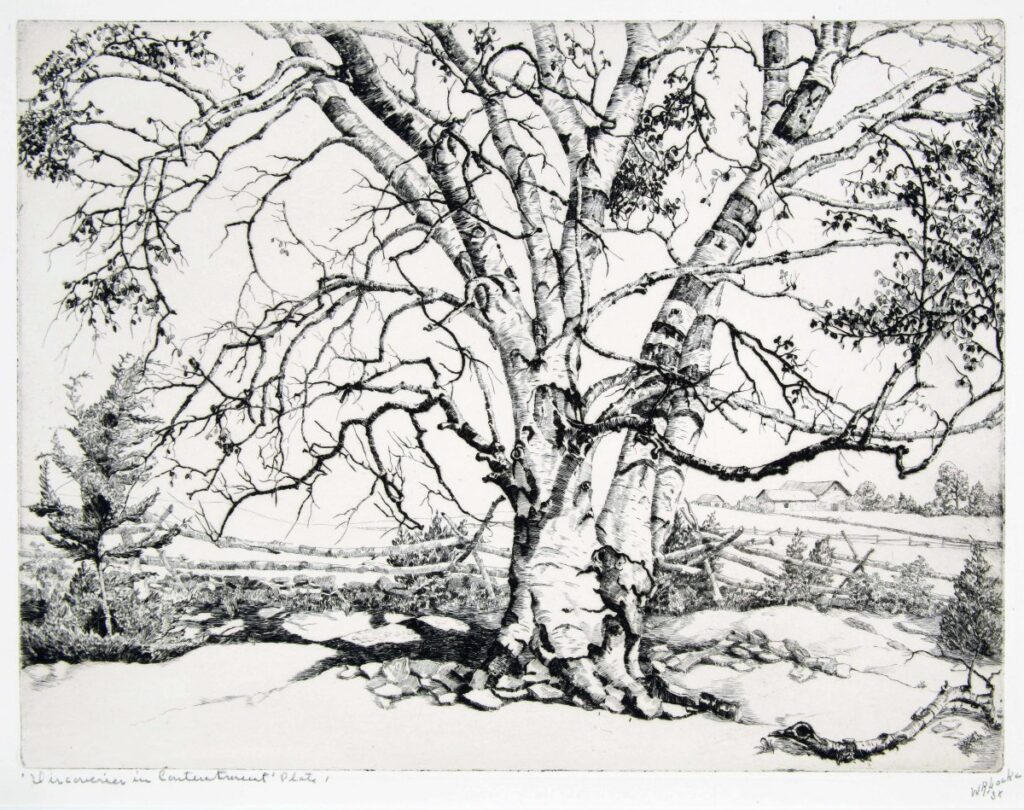
Discoveries in Contentment, 1938
Walter Ronald Locke (American, born Winchester, Massachusetts, 1883–1983), Discoveries in Contentment, 1938, etching on paper, High Museum of Art, Atlanta, purchase with funds from the Lawrence and Alfred Fox Foundation for the Ralph K. Uhry Collection, 1991.182
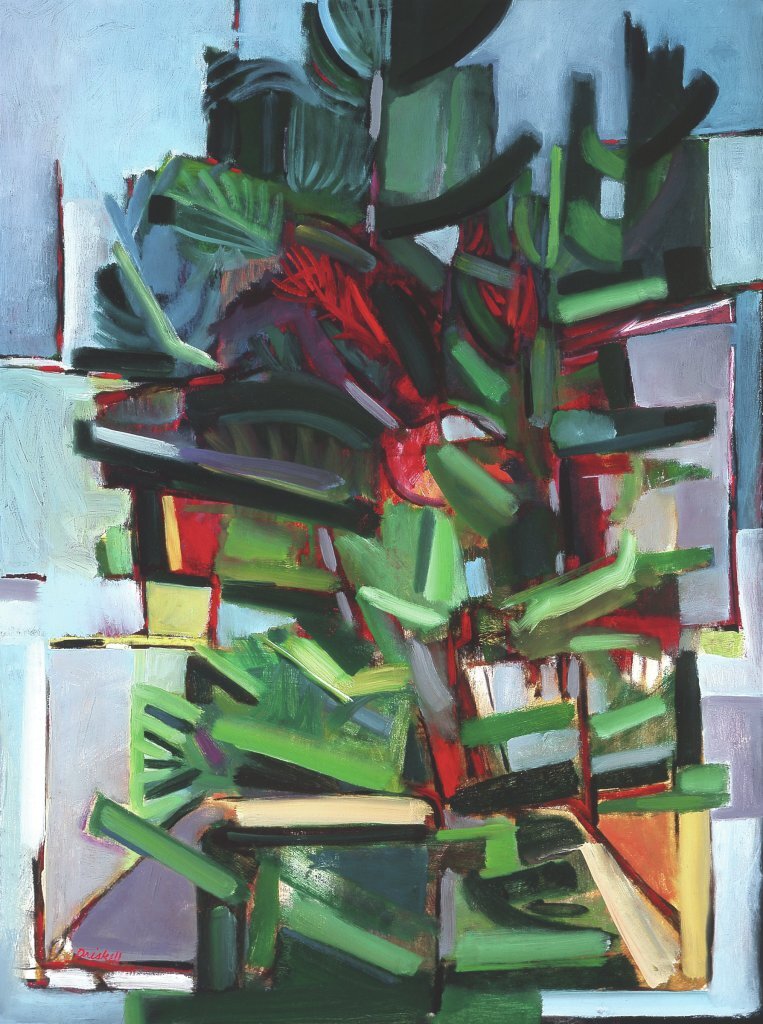
Two Pines #2, 1964
For over forty-five years, David C. Driskell meditated on the majesty and spiritualism of the pine tree. He first explored the subject during an artist’s residency at Maine’s Skowhegan School of Painting and Sculpture in 1953, inspired by the pine trees in the region. He revisited the subject often, employing bold swaths of color and heavy brushwork to suggest the pine’s evergreen resilience and using a fractured visual language to convey a sense of dynamic movement. For Driskell, the pine tree’s distinctive needles, branches, and trunk made it a unique challenge for translating a three-dimensional object onto a two-dimensional plane:
I looked at trees with the notion of trying to see segments of them. I was trying to see into the center of the tree, around it, and up into its branches. I wanted to go beyond the known qualities of the tree and investigate its atmosphere. I wanted to take the viewer in all directions within the tree at one time.
David C. Driskell (American, born Eatonton, Georgia, 1931–2020), Two Pines #2, 1964, oil on canvas, High Museum of Art, Atlanta, gift of David C. and Thelma G. Driskell, 2000.203. © Estate of David C. Driskell.
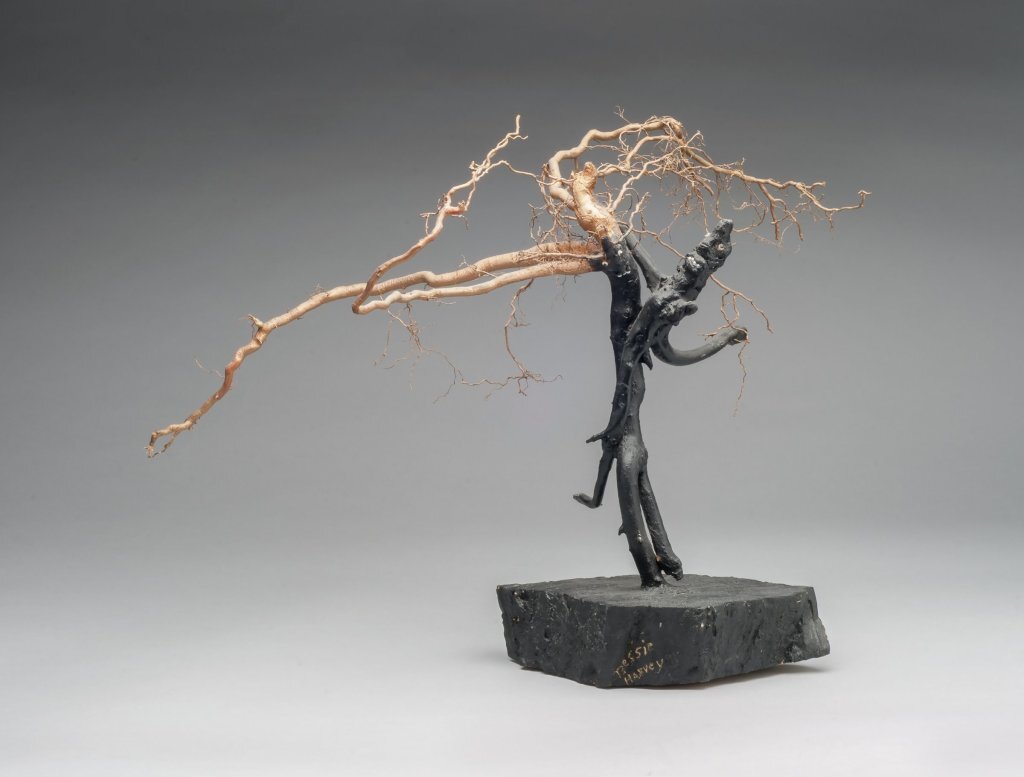
Jacob Wrestling with the Angel, ca. 1990
Bessie Harvey believed that her art manifested the spirits inhabiting the found wood she used to create her sculptures: “I discovered they’re alive, just like we are. The Lord showed me how to bring these faces out of these pieces of wood, so I could have somebody to talk to.” Here, Harvey subtly manipulates and shapes the roots of a tree to create a dramatic but delicate evocation of the Abrahamic story of Jacob confronting the angel of God. One root stalk signifies the angel’s crackling hair, while another mimes Jacob arching painfully backward.
Bessie Harvey (American, born Dallas, Georgia, 1929–1994), Jacob Wrestling with the Angel, ca. 1990, wood, paint, and plastic beads, High Museum of Art, Atlanta, gift of Lynne and Jim Browne, 2005.208. © 2026 Estate of Bessie Harvey / Artists Rights Society (ARS), New York.
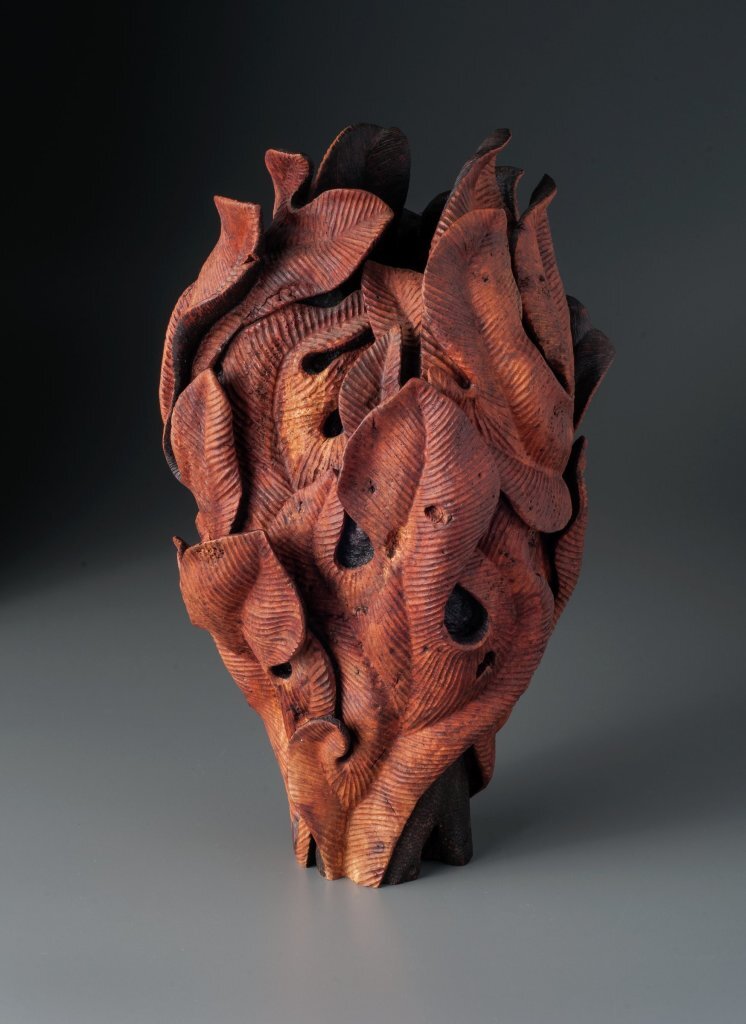
Restless Leaves Vase, 1988
Michelle Holzapfel is a self-taught woodworker who combines woodturning and carving methods to craft irregular, asymmetrical forms, deviating from the symmetry of traditional woodturning. This sculpture, for example, appears as though woven from leaves. From her Vermont studio, Holzapfel sources local hardwood trees with burls—the “bulge on a tree, as benign as a wart,” in the artist’s words—to make her sculptures. “Polishing reveals the wild beauty of the burl’s irregular growth patterns,” she says. “I use their irregularity as an opportunity to create a testament to the dynamic forces that shape trees.”
Made by Michelle Holzapfel (American, born Woonsocket, Rhode Island, 1951), Restless Leaves Vase, 1988, cherry burl, High Museum of Art, Atlanta, gift of Martha and Pat Connell, 2014.407.
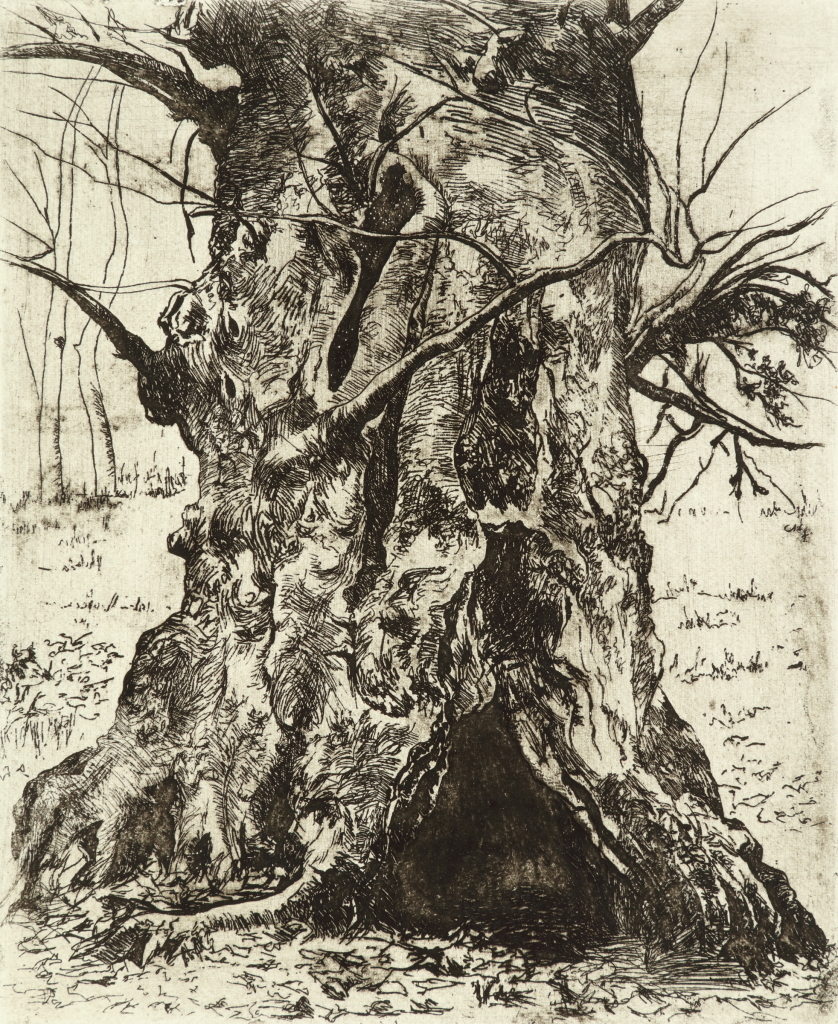
Untitled (Tree Trunk), ca. 1910
While Joseph Stella is more well known for his Futurist paintings of New York, he also drew inspiration from the natural world. This etching is thought to depict the American chestnut (Castanea dentata), a species endangered by a devastating blight first discovered at the Bronx Zoo in 1904. Stella maximizes the contrasting tones and linear forms through his etching technique. The inky shadow of the tree’s burrow and the wispy strokes at the trunk’s base and sides are laid with the same dexterity as calligraphy, revealing the capacity of etching to feel more painted than printed.
Joseph Stella (American, born Muro Lucano, Italy, 1877–1946), Untitled (Tree Trunk), ca. 1910, etching on paper, High Museum of Art, Atlanta, gift of Carl and Marian Mullis, 1995.158.
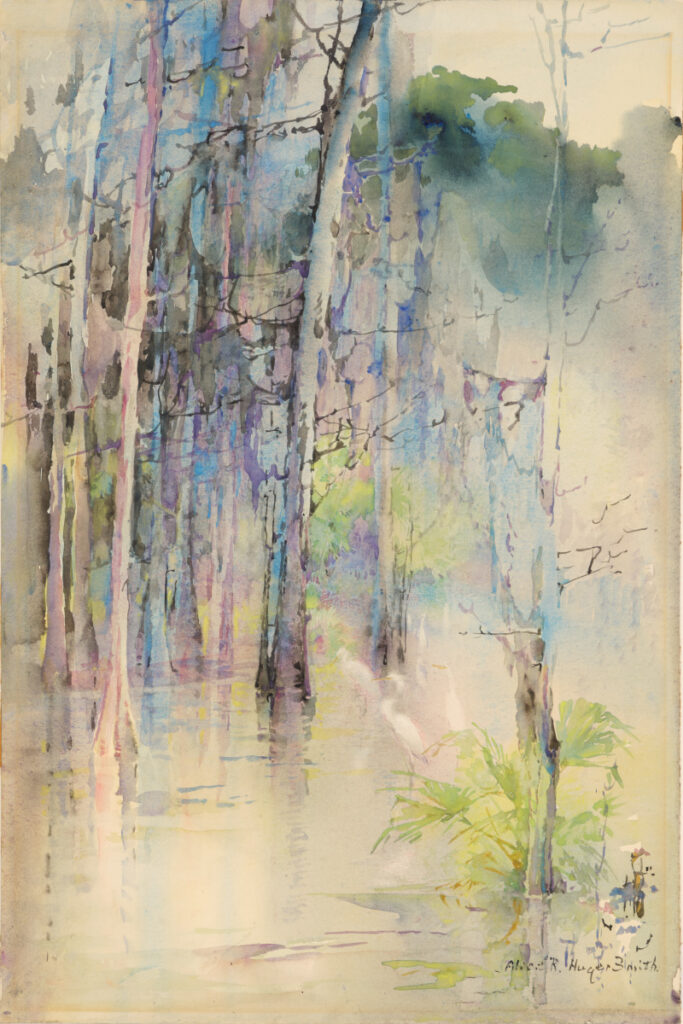
Alice Ravenel Huger Smith (American, born Charleston, South Carolina, 1876–1958), The Ashepoo Swamp, early twentieth century, watercolor on paper, High Museum of Art, Atlanta, J. J. Haverty Collection, 25.2.
This exhibition is organized by the High Museum of Art, Atlanta.
Premier Exhibition Series Sponsor

Premier Exhibition Series Supporters
Sarah and Jim Kennedy
Major Exhibition Series Supporter
The Fay S. and W. Barrett Howell Family Foundation
Major Exhibition Series Sponsor

Benefactor Exhibition Series Supporter
Robin and Hilton Howell
Ambassador Exhibition Series Supporters
Loomis Foundation
Sara and Paul Steinfeld
Mrs. Harriet H. Warren
Contributing Exhibition Series Supporters
Mary and Neil Johnson
Mr. and Mrs. Baxter Jones
Megan and Garrett Langley
Margot and Danny McCaul
Wade A. Rakes II and Nicholas Miller
Louise Sams and Jerome Grilhot
Lisa Cannon Taylor and Chuck Taylor
Generous support is also provided by
Alfred and Adele Davis Exhibition Endowment Fund
Anne Cox Chambers Exhibition Fund
Barbara Stewart Exhibition Fund
Dorothy Smith Hopkins Exhibition Endowment Fund
Eleanor McDonald Storza Exhibition Endowment Fund
The Fay and Barrett Howell Exhibition Fund
Forward Arts Foundation Exhibition Endowment Fund
Helen S. Lanier Endowment Fund
John H. and Wilhelmina D. Harland Exhibition Endowment Fund
Katherine Murphy Riley Special Exhibition Endowment Fund
Margaretta Taylor Exhibition Fund
RJR Nabisco Exhibition Endowment Fund